意义势能、方向一致性、系缚强度等变量定义与取值范围;个人意义清晰度量表、四维光谱自评量表;WITNESS 双通道测量(自评 A + 行为任务 B)。
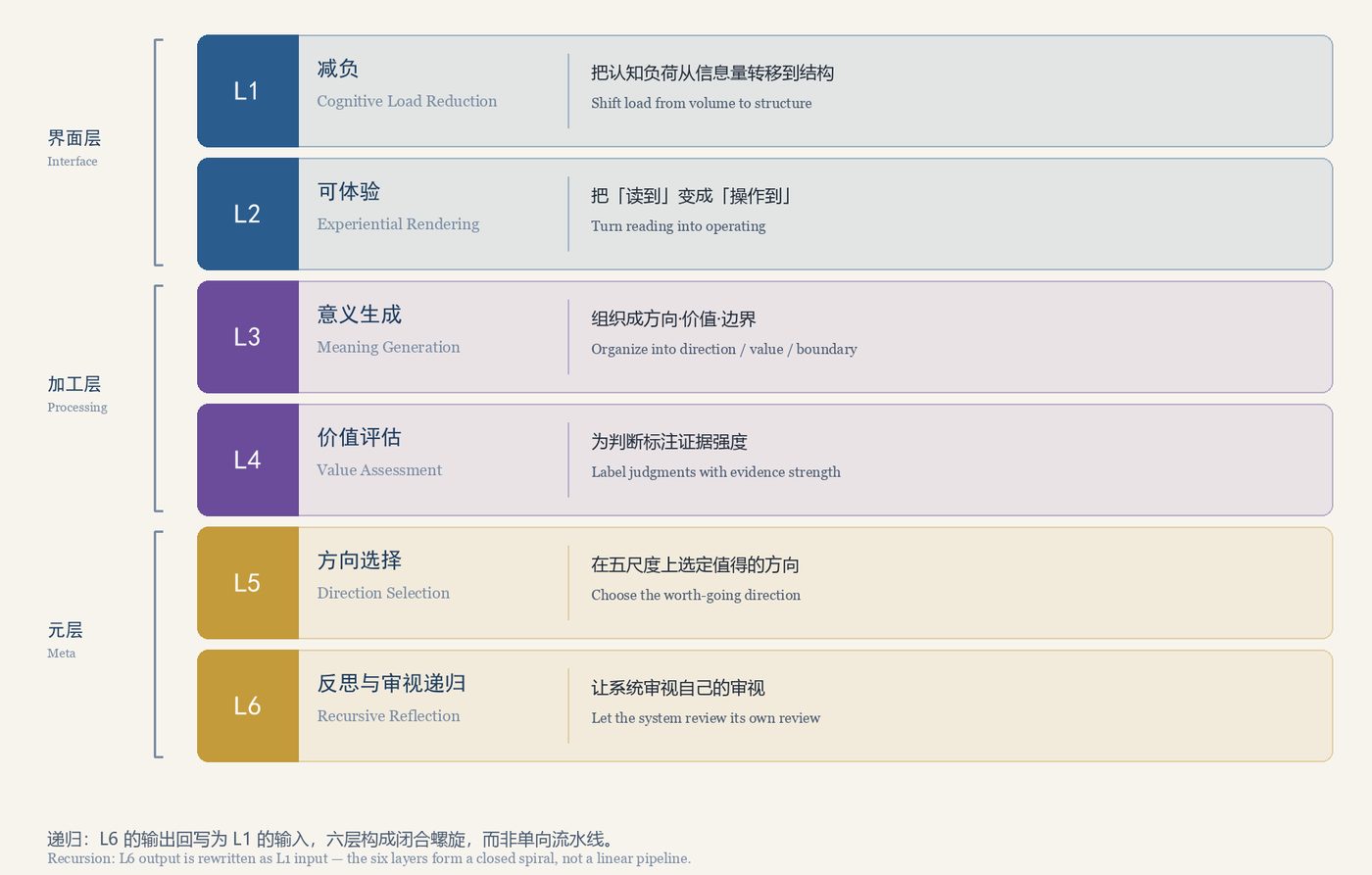
③ 元智能六层应用框架
从"减负"到"反思与审视递归"六层,三层闭环叠加,五尺度典型形态,每层标注证据等级与证伪条件。
④ 证伪矩阵与索引
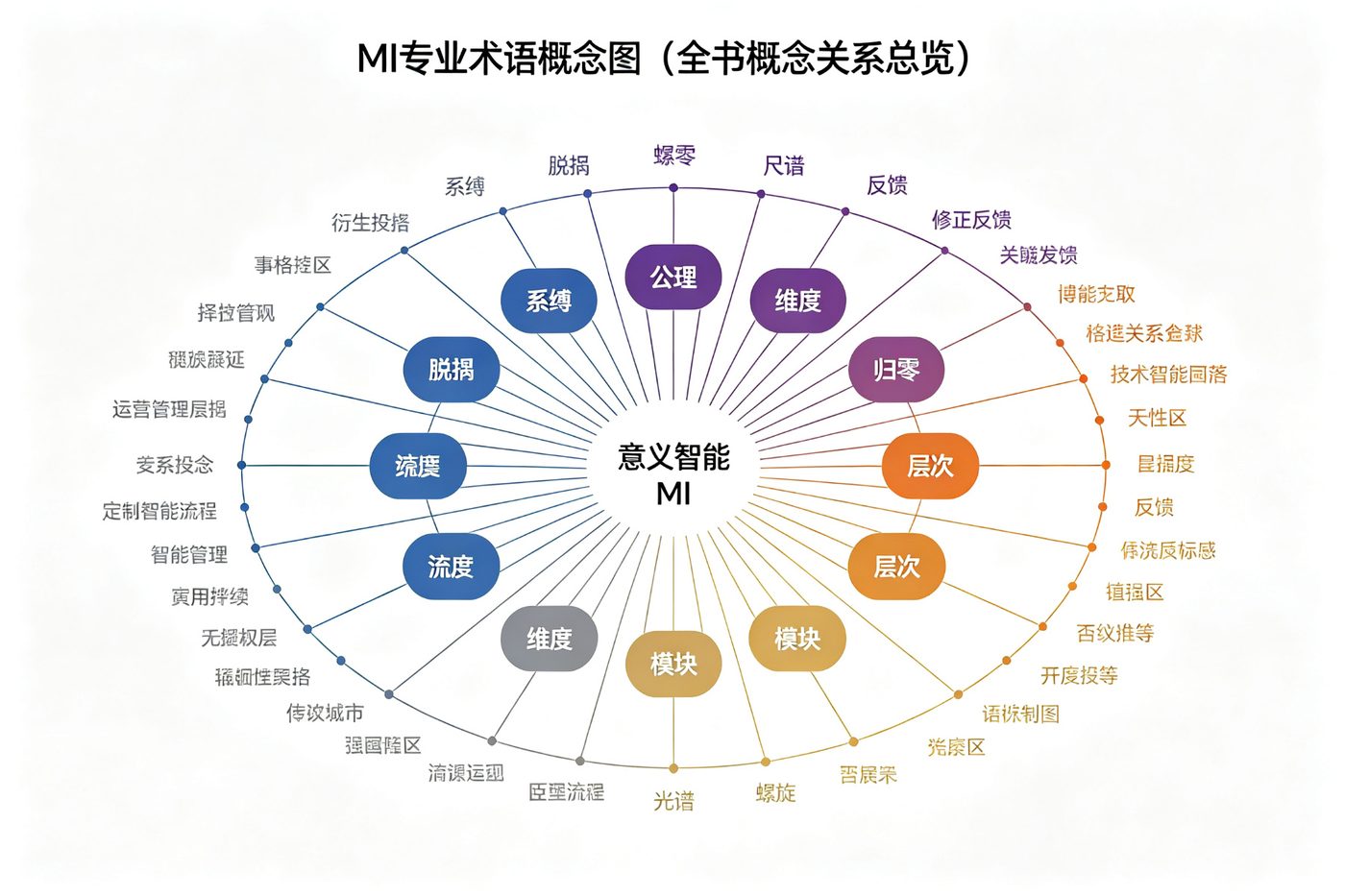
18 个核心假设的证伪条件与证据等级、理论失败矩阵、术语与工具包快速索引。
附录 · 讲解文稿
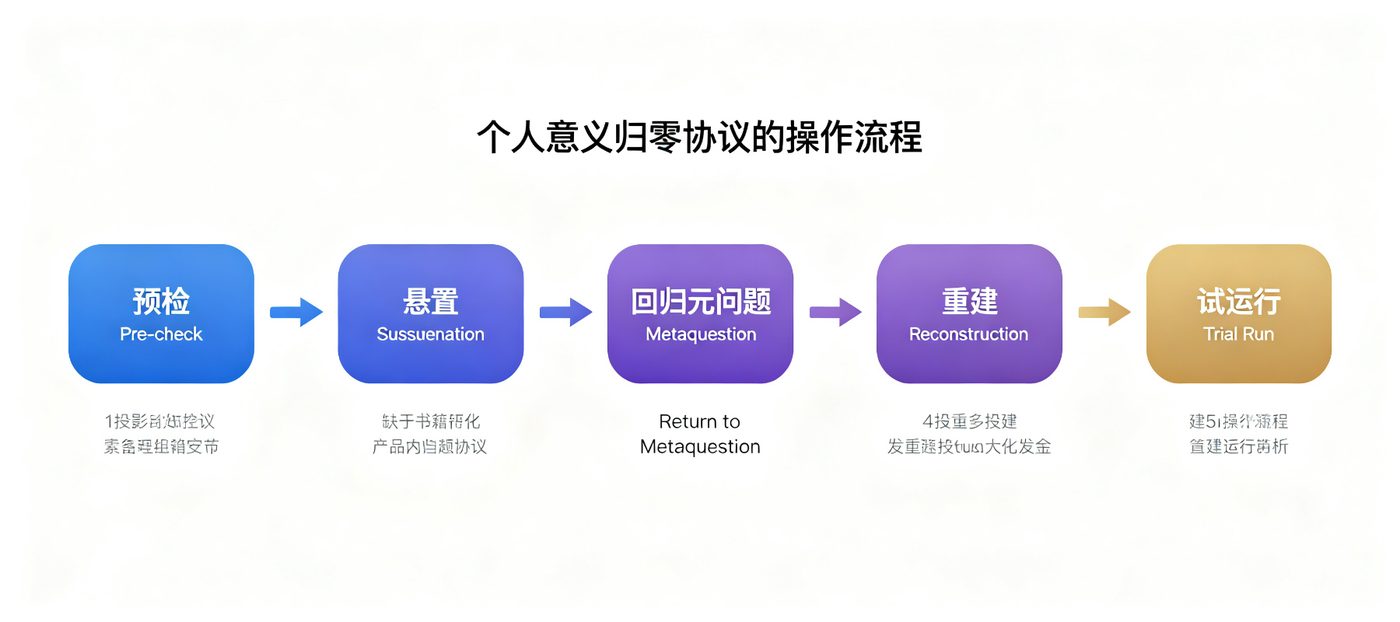
附录是全书的工具箱,分四部分:给实践者的工具手册(个人、组织、城市、通用四个板块,都是可直接上手的模板);给研究者的核心变量与测量量表,V7 升级版引入 WITNESS 双通道测量——通道 A 用户自我报告,通道 B 行为任务测量,两者整合得到综合评分。
元智能分层应用框架把理论转成六层操作栈,每层讲清核心问题、操作方法、证据等级和常见误区,六层本身也是待检验的整合结构。最后是核心命题证伪矩阵与术语索引,相当于全书导航表。
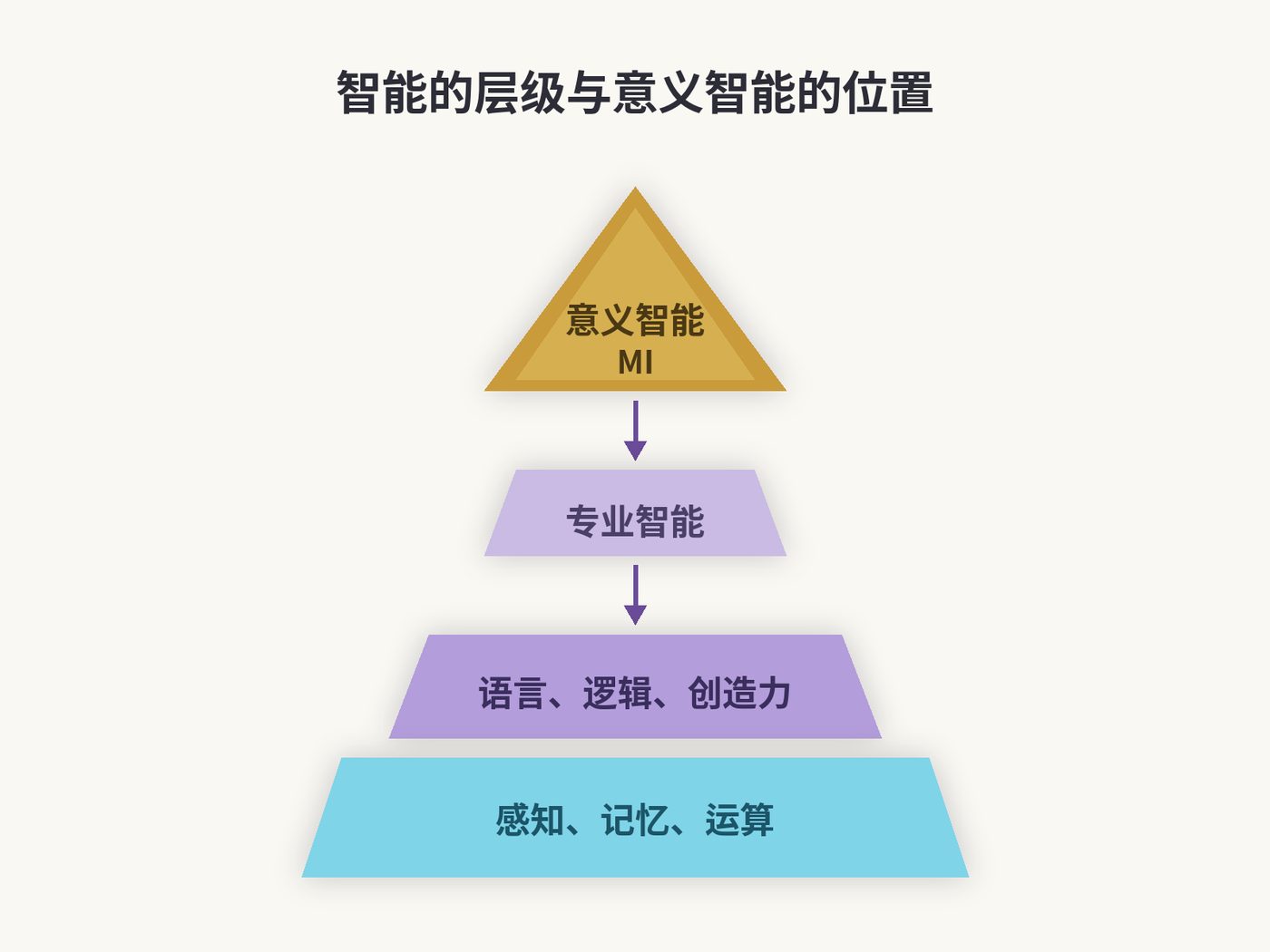
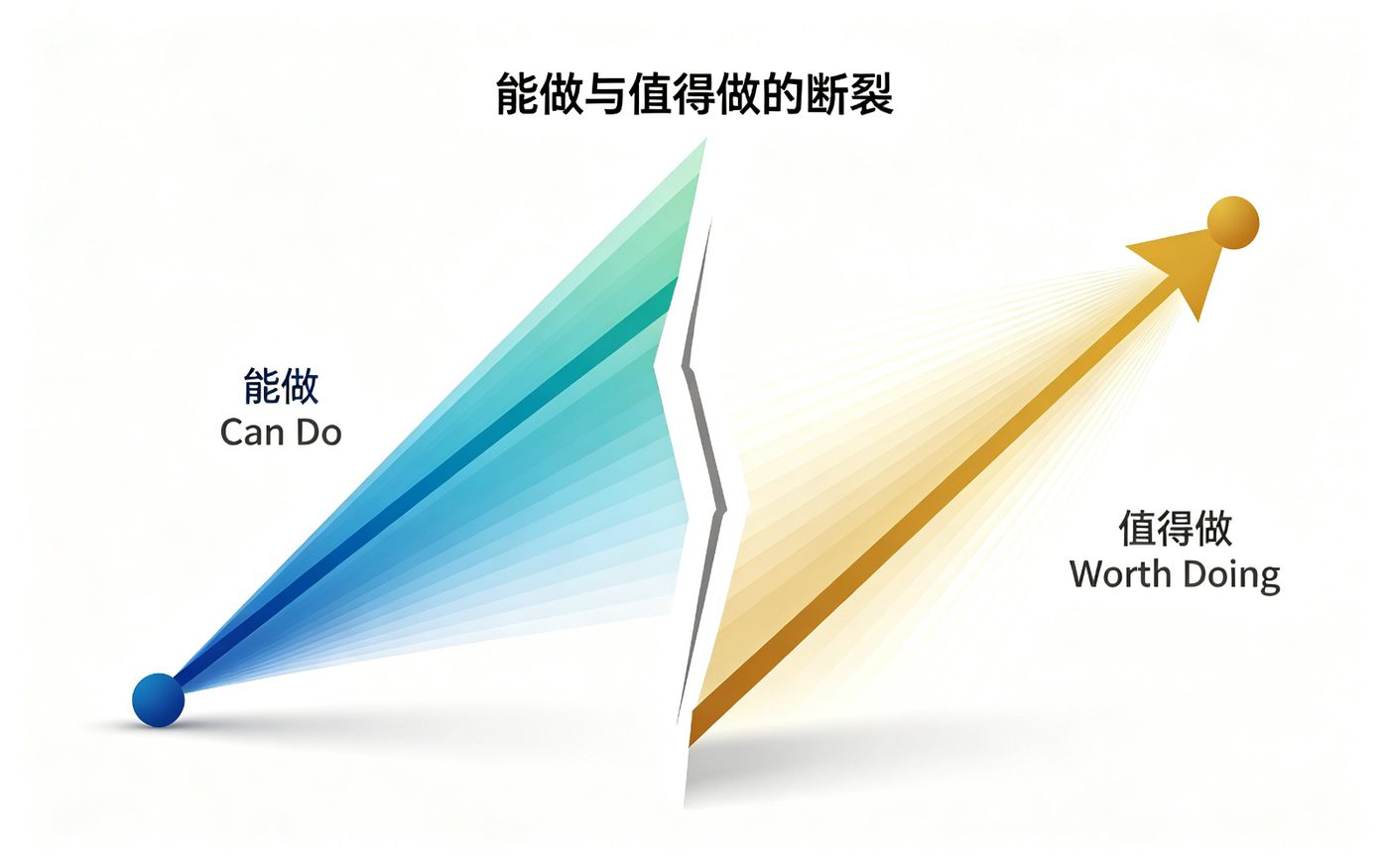
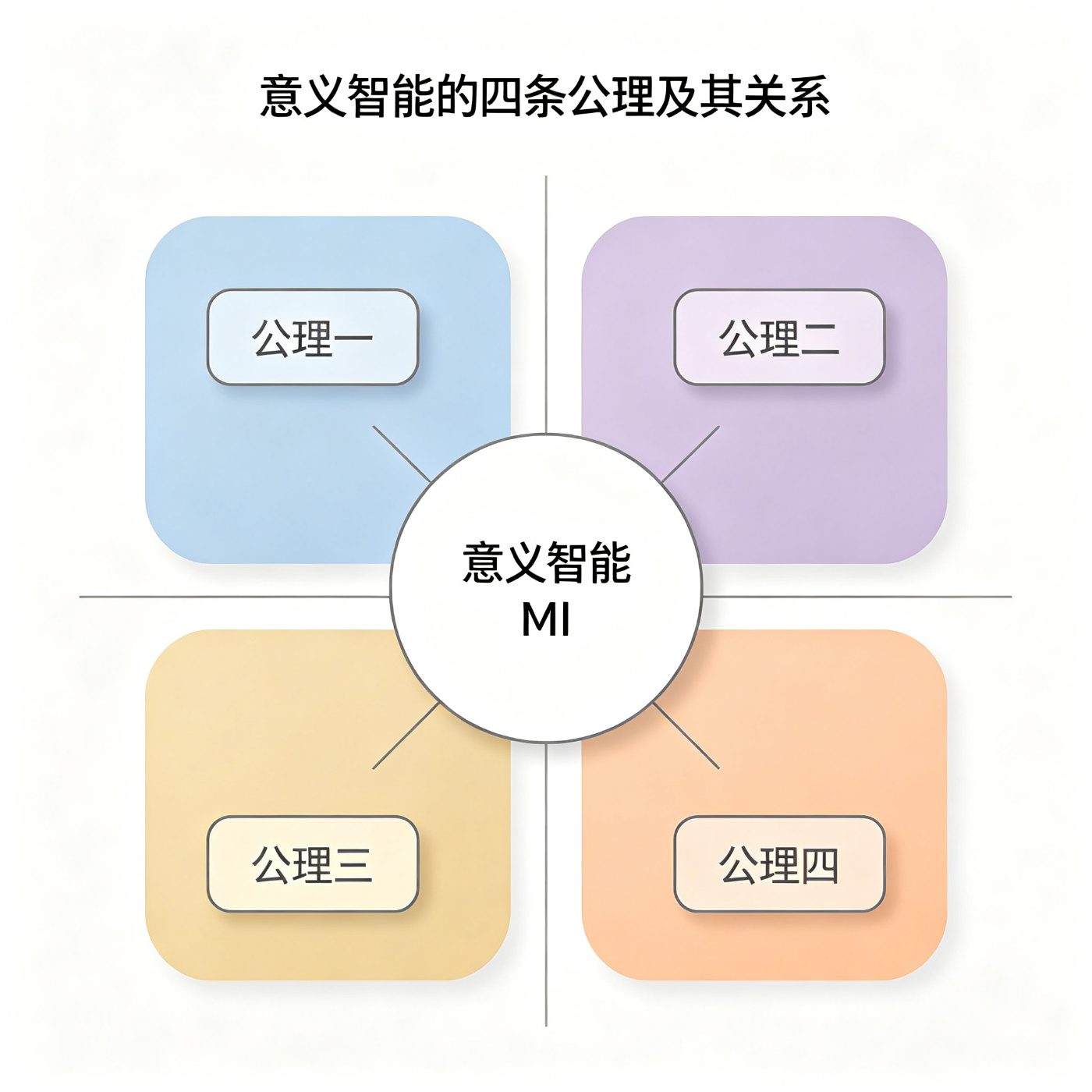
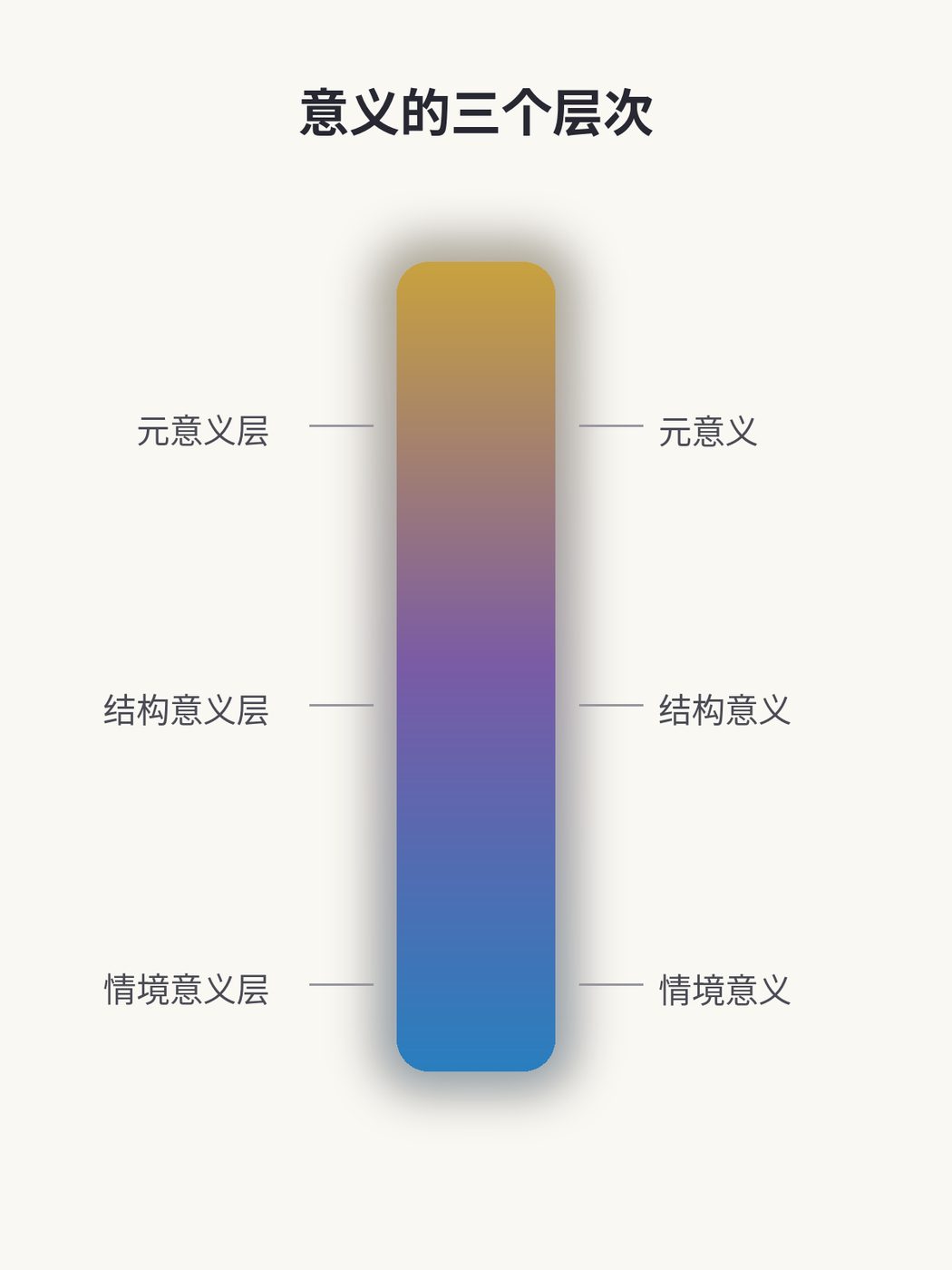
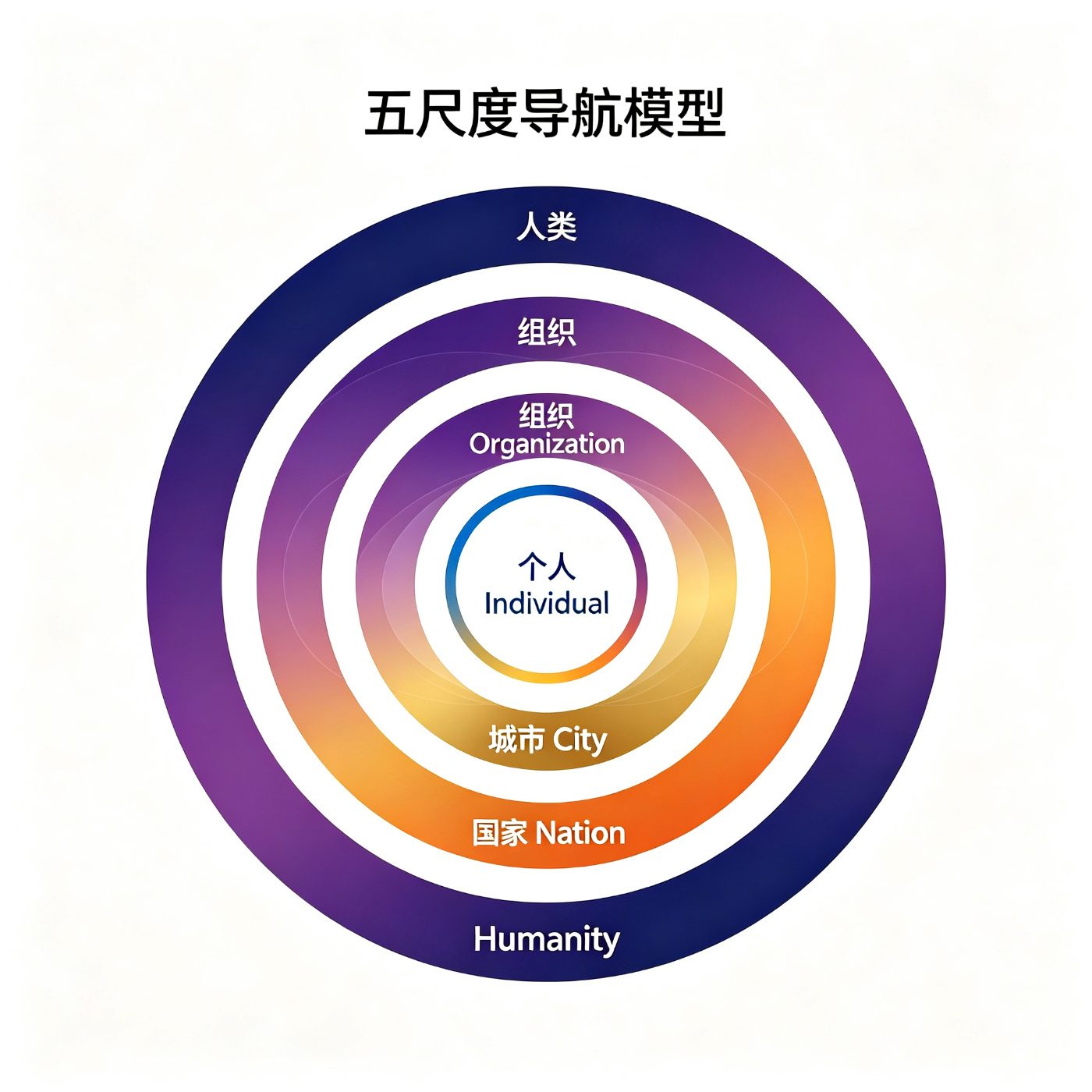
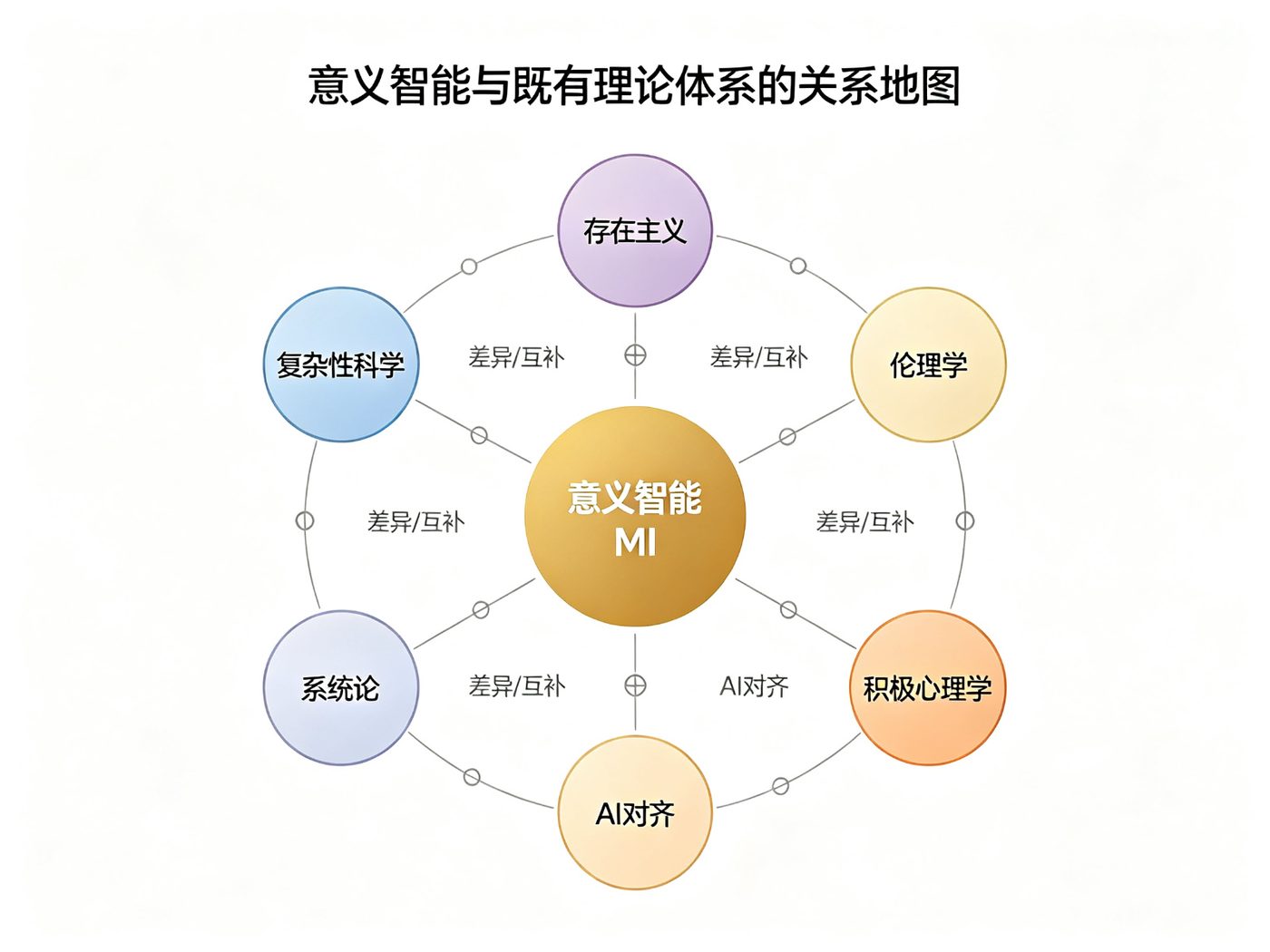
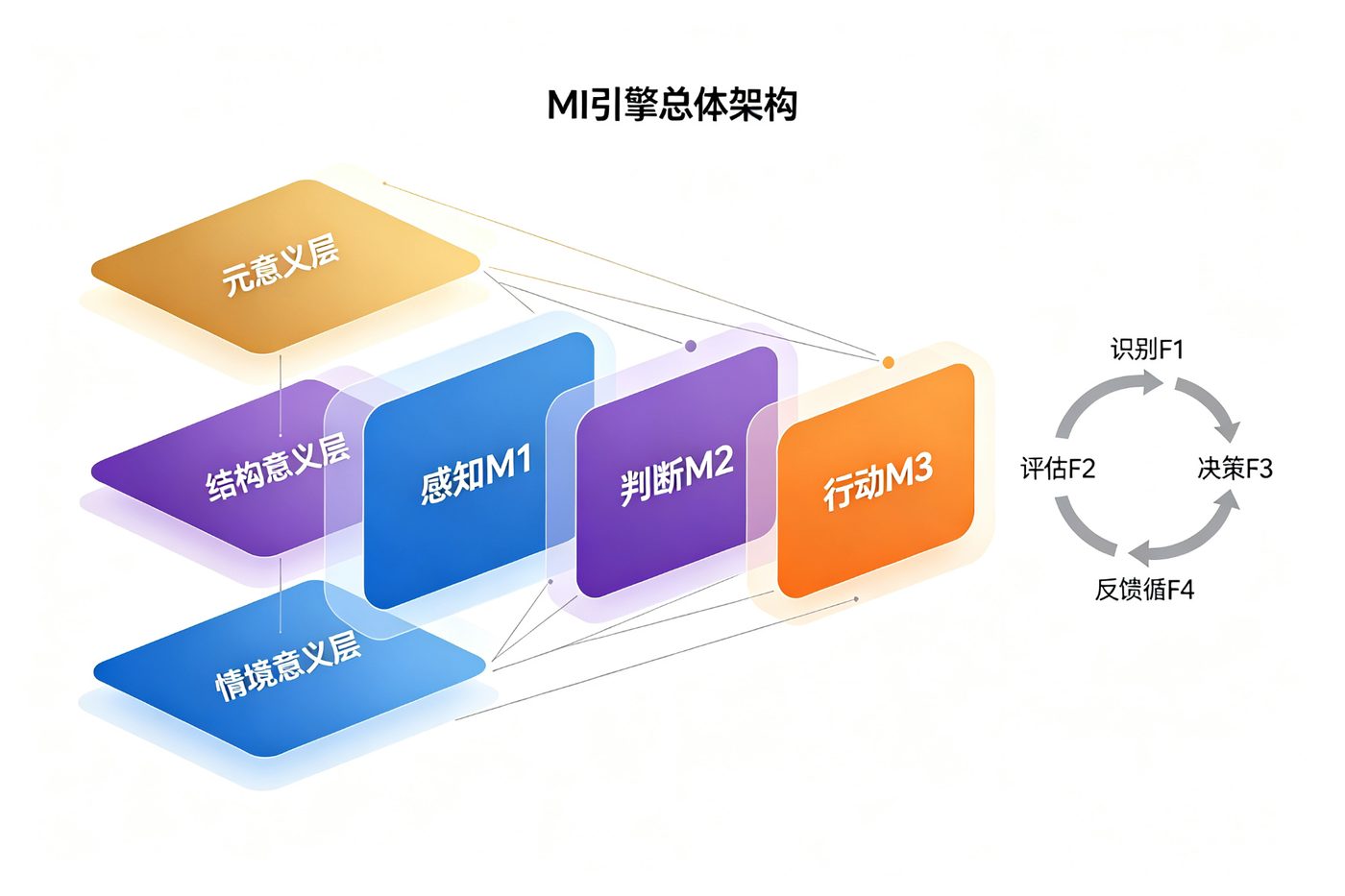
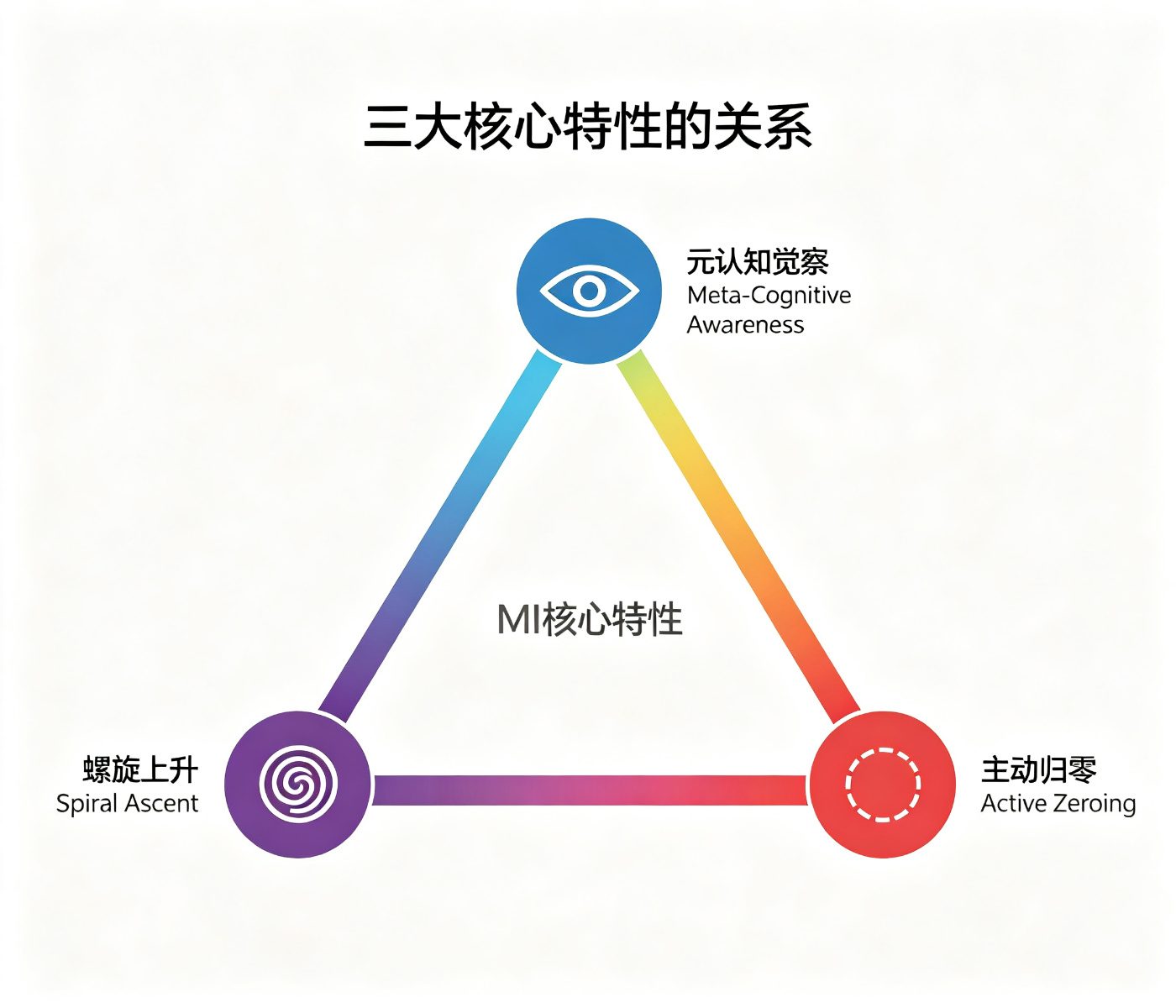
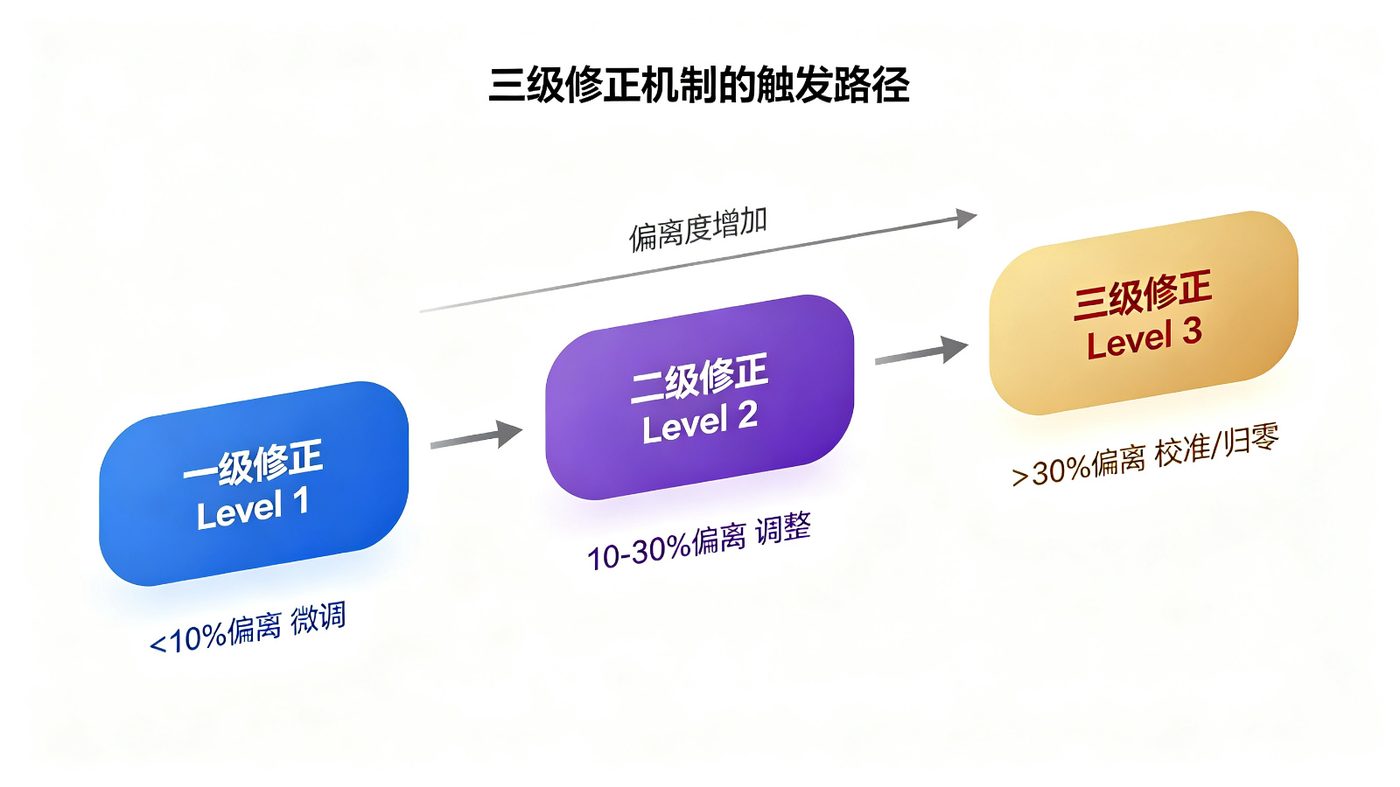
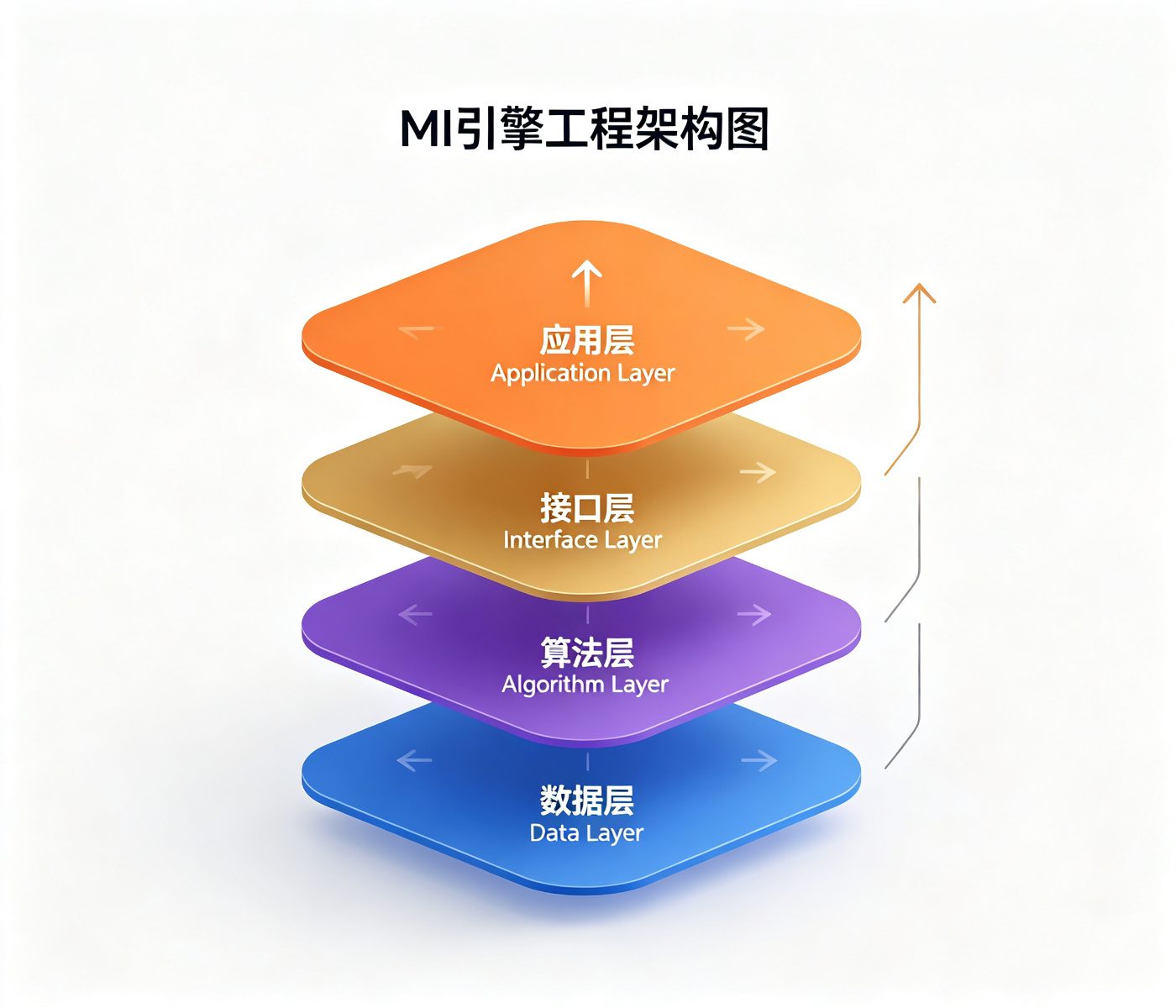
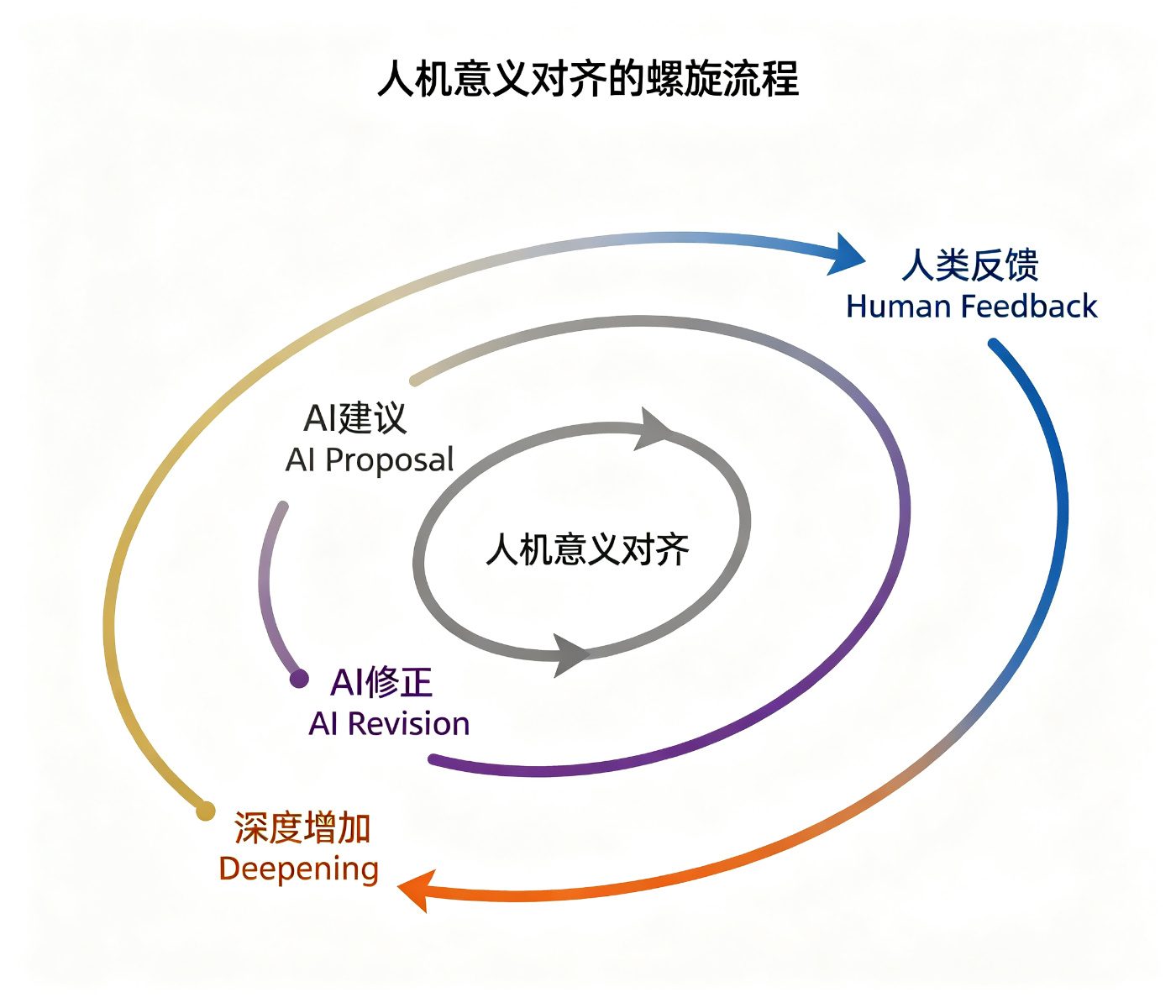
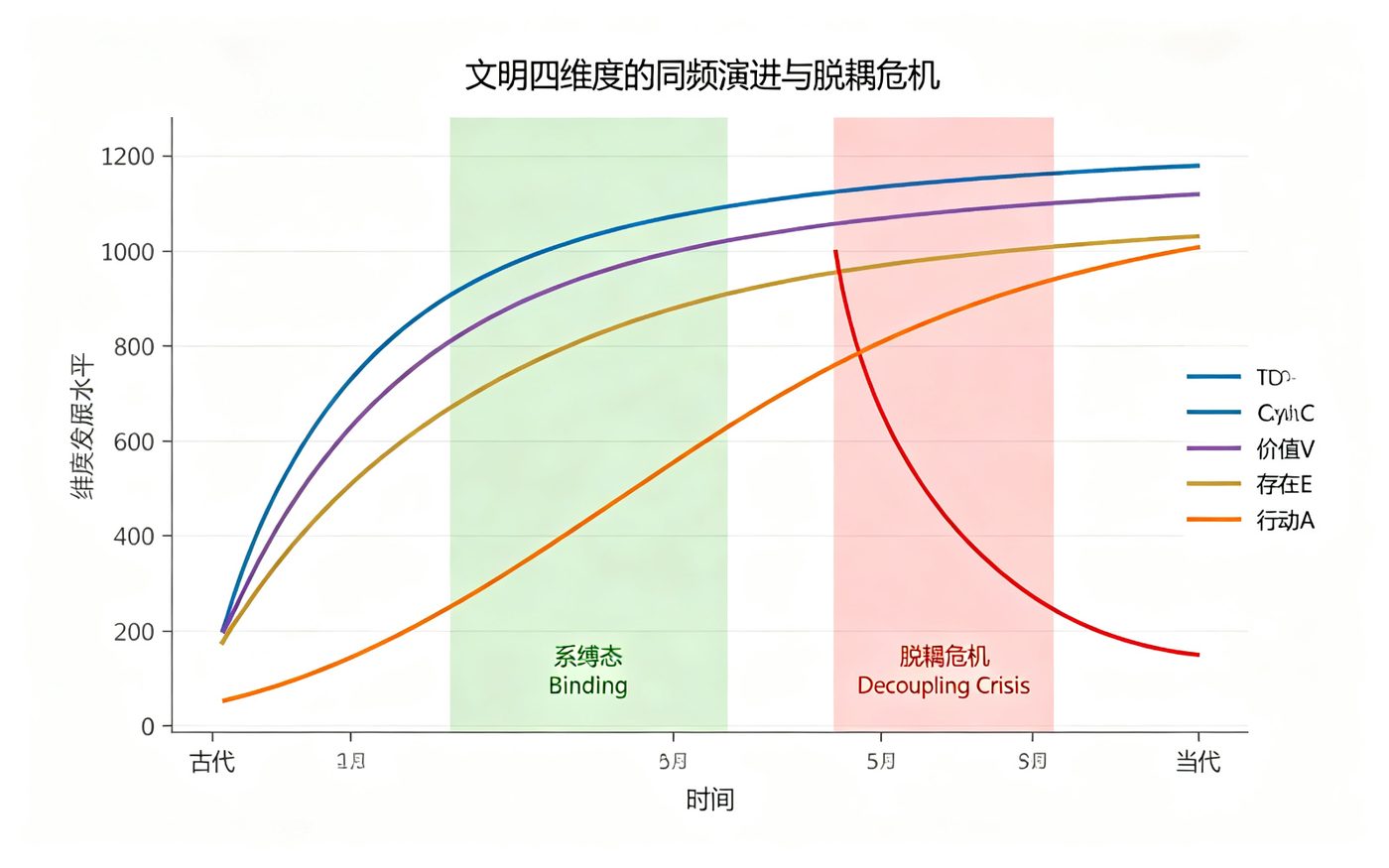
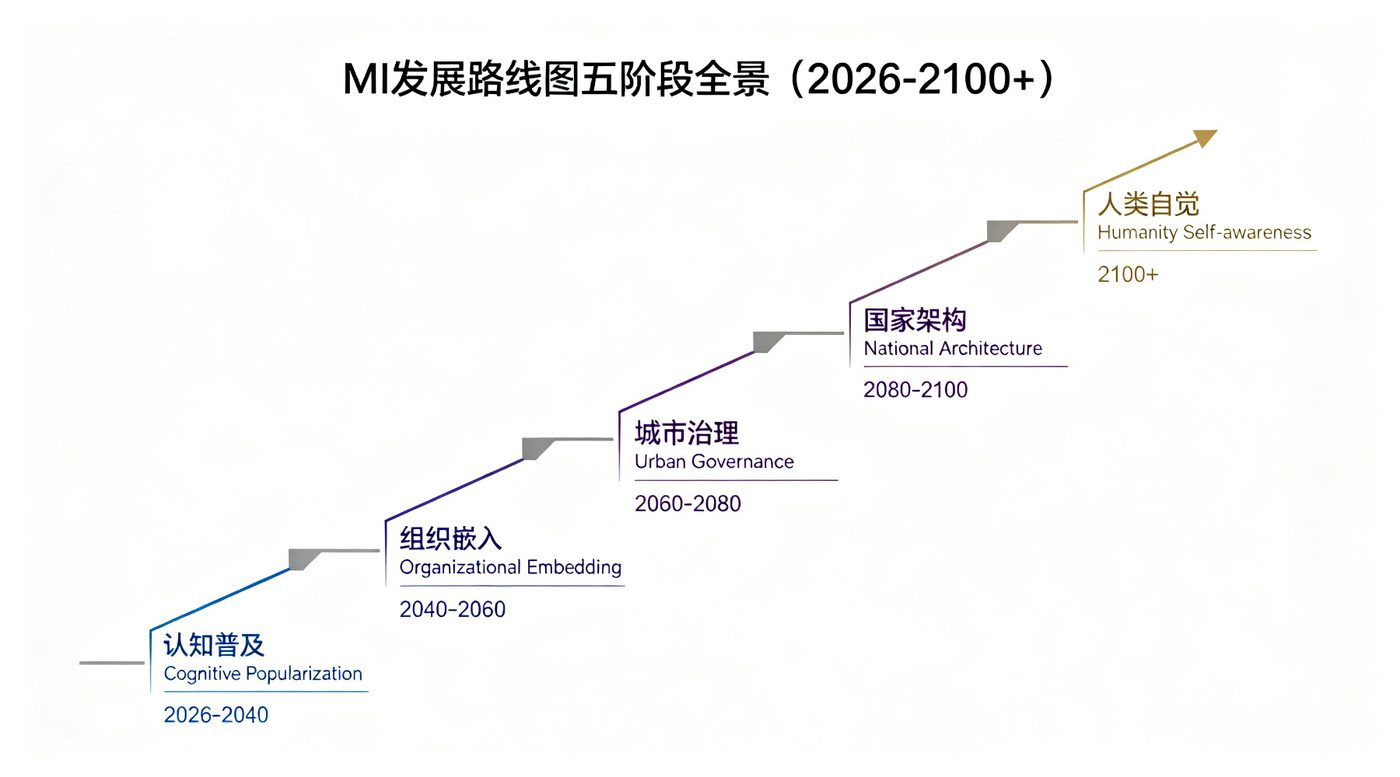
{"caps": {"fig1-1_智能层级": ["图 1.1 智能的层级与意义智能的位置", "Figure 1.1 The Hierarchy of Intelligence and the Position of Meaning Intelligence"], "fig1-2_能做与值得做的断裂": ["图 1.2 “能做”与“值得做”的断裂", "Figure 1.2 The Gap Between “Can Do” and “Worth Doing”"], "fig2-1_四条公理": ["图 2.1 意义智能的四条公理及其关系", "Figure 2.1 The Four Axioms of Meaning Intelligence and Their Interrelations"], "fig3-1_意义光谱带": ["图 3.1 意义的三个层次(光谱带垂直结构)", "Figure 3.1 The Three Levels of Meaning (Spectral Band Vertical Structure)"], "fig4-1_五尺度导航模型": ["图 4.1 五尺度导航模型", "Figure 4.1 The Five-Scale Navigation Model"], "fig5-1_理论关系地图": ["图 5.1 意义智能与既有理论体系的关系地图", "Figure 5.1 The Relationship Map of Meaning Intelligence and Existing Theoretical Frameworks"], "fig7-1_MI引擎总体架构": ["图 7.1 MI引擎总体架构——三层次·三模块·四流程集成视图", "Figure 7.1 MI Engine Overall Architecture — Integrated View of Three Levels·Three Modules·Four Processes"], "fig7B-1_三大核心特性": ["图 7B.1 元认知觉察·螺旋上升·主动归零的关系", "Figure 7B.1 The Three Core Properties: Meta-Cognitive Awareness·Spiral Ascent·Active Zeroing"], "fig11-1_三级修正机制": ["图 11.1 三级修正机制的触发路径", "Figure 11.1 Trigger Pathways of the Three-Level Revision Mechanism"], "fig12-1_工程架构图": ["图 12.1 MI引擎工程架构图", "Figure 12.1 MI Engine Engineering Architecture Diagram"], "fig13-2_个人意义归零协议": ["图 13.2 个人意义归零协议的操作流程", "Figure 13.2 Operational Flow of Personal Meaning Zeroing Protocol"], "fig19-1_人机意义对齐螺旋": ["图 19.1 人机意义对齐的螺旋流程", "Figure 19.1 Spiral Process of Human-AI Meaning Alignment"], "fig24-2_四维同频演进与脱耦": ["图 24.2 文明四维度的同频演进与脱耦危机", "Figure 24.2 Synchronous Evolution and Decoupling Crises of Civilization's Four Dimensions"], "fig25-1_MI发展路线图": ["图 25.1 MI发展路线图五阶段全景(2026-2100+)", "Figure 25.1 Five-Stage Panorama of the MI Development Roadmap (2026-2100+)"], "figZ-1_文明自觉的黎明": ["图 终章.1 文明自觉的黎明——从盲目演化到自觉选择", "Figure Final.1 The Dawn of Civilizational Consciousness — From Blind Evolution to Conscious Choice"], "figC-1_元智能六层栈": ["图 C.1 元智能六层栈", "Figure C.1 The Meta-Intelligence Six-Layer Stack"], "figE-1_全书概念关系总览": ["图 E.1 MI专业术语概念图(全书概念关系总览)", "Figure F.1 MI Terminology Concept Map (Overview of Conceptual Relations)"]}, "heads": {"第一章 · 为什么现在需要意义智能": "Chapter 1 · Why We Need Meaning Intelligence Now", "第二章 · 核心理论体系": "Chapter 2 · The Core Theoretical System", "第三章 · 运行机制与工程化": "Chapter 3 · Mechanisms and Engineering", "第四章 · 多尺度多领域实践": "Chapter 4 · Multi-Scale, Multi-Domain Practice", "第五章 · 文明演化视角的总结与展望": "Chapter 5 · Civilizational Evolution and Outlook", "附录 · 实践工具与研究支撑": "Appendix · Tools and Research Support", "全书总结 · 给智能装上方向舵": "Full-Book Summary · A Rudder for Intelligence"}, "ui": {"hero_h1": ["《意义智能》:给智能装上方向舵", "Meaning Intelligence: A Rudder for Intelligence"], "hero_sub": ["意义文明的认知操作系统 · 全书解读有声读物(中文讲解 40:11 / English narration 18:54)", "The Cognitive Operating System of the Meaning Civilization · Audio Companion (English 18:54 / 中文 40:11)"], "hero_tag": ["可视 · 可听 · 可读 一体化解读", "Visual · Audio · Readable — Bilingual Edition"], "play_btn": ["🎧 播放全书讲解(中文)", "🎧 Play Full Narration (English)"], "sub_hint": ["播放后此处将同步显示字幕", "Subtitles will appear here during playback"], "ch_hint": ["点击下方章节,或直接播放——画面会随讲解自动同步", "Click a chapter below or press play"], "transcript": ["讲解文稿", "Transcript"]}, "i18n": {"zh": {"audio": "assets/audio.mp3", "tl": {"total": 2411, "chapters": [{"t": 0, "n": "第一章 · 为什么现在需要意义智能"}, {"t": 301, "n": "第二章 · 核心理论体系"}, {"t": 868, "n": "第三章 · 运行机制与工程化"}, {"t": 1302, "n": "第四章 · 多尺度多领域实践"}, {"t": 1560, "n": "第五章 · 文明演化总结与展望"}, {"t": 1888, "n": "附录 · 实践工具与研究支撑"}, {"t": 2182, "n": "全书总结 · 给智能装上方向舵"}]}, "texts": null}, "en": {"audio": "assets_en/audio_en.mp3", "tl": {"total": 1136.2, "chapters": [{"t": 0.0, "n": "Chapter 1 · Why We Need Meaning Intelligence Now"}, {"t": 172.8, "n": "Chapter 2 · The Core Theoretical System"}, {"t": 472.3, "n": "Chapter 3 · Mechanisms and Engineering"}, {"t": 677.0, "n": "Chapter 4 · Multi-Scale, Multi-Domain Practice"}, {"t": 800.1, "n": "Chapter 5 · Civilizational Evolution and Outlook"}, {"t": 947.2, "n": "Appendix · Tools and Research Support"}, {"t": 1044.3, "n": "Full-Book Summary · A Rudder for Intelligence"}]}, "texts": ["Hello, and welcome. In this audio program we walk you through Meaning Intelligence — the cognitive operating system of the meaning civilization. By the end, you will have a clear picture of the book's core question, its version-seven upgrade, and why this theory had to emerge now. Chapter One begins with the most fundamental change in this edition: the book has evolved from a \"theoretical ecosystem\" into a complete \"evidence architecture.\" Every theoretical proposition has been converted into a testable hypothesis. Every core concept now carries an explicit evidence grade. The original equations have been upgraded into dynamically estimable models, and all related experiments are pre-registered. Evidence is graded from E-zero to E-six: E-zero means a concept has only been defined; E-six means it has survived external validation across contexts and cultures. And the book's academic integrity pledge centers on one word: falsifiability. If any core module reaches its failure threshold in a pre-registered experiment, the corresponding chapter will be flagged or removed in later editions. So why does this theory need to exist at all? Look around the intelligence era and you will see a striking rupture: logical, computational, and perceptual intelligences are advancing rapidly, yet the capacity to judge whether something is worth doing has never been systematically theorized or engineered. AI can answer \"how to do it,\" but more and more people are asking \"what is it for?\" The book's core diagnosis is this: power and meaning are separating. Capability cares only about reaching goals faster and more accurately; meaning asks whether the goal itself is worthwhile. No existing theory of intelligence has built directional judgment into its own definition — and that theoretical vacuum is exactly what Meaning Intelligence fills. Crucially, Meaning Intelligence is not a new intelligence sitting beside IQ or EQ. It is a meta-intelligence: a capacity that regulates the direction of all other intelligent activities. Other intelligences answer \"can we do it?\" Meaning Intelligence answers \"is it worth doing, worth it for whom, and at what scale?\" Why now? Because three turning points have converged. The technological turning point: general AI and bioengineering keep expanding what we can do, making the choice of direction urgent. The social turning point: a deepening crisis of trust has loosened the old meaning systems. The cognitive turning point: information overload makes people hunger for clear anchors of meaning. The entire argument rests on three scientific battle lines: the science of civilizational risk — can instability be quantified; the science of cognitive leaps — can they be observed and trained; and Meaning-AI engineering — can it improve long-term decision quality. The pledge applies to all three: if any line fails its pre-registered experiments, the corresponding modules are marked falsified. No forcing the argument. In short, Chapter One explains why we need Meaning Intelligence now: the rupture between \"can do\" and \"worth doing,\" and the urgency of closing it.", "Chapter Two builds the core theoretical system. A rigorous theory needs foundations, so we begin with four axioms — the indivisible assumptions from which everything else grows. Axiom one: meaning arises from the tension between finitude and openness. Our time, resources, and cognition are limited, so we must choose — and choosing generates meaning. Yet the future is open and uncertain, so we need direction. An eternal, infinite being would need neither choices nor direction — and therefore no Meaning Intelligence. Axiom two: meaning must be perceivable by a subject, yet does not depend on subjective feelings. There is a difference between \"this thing is meaningful\" and \"I feel it is meaningful.\" The integrity of an ecosystem is meaningful to future generations even if no one alive feels it now. Meaning is an objective worthiness-relation between a subject and a larger system. Axiom three: meanings at different scales cannot be reduced to one another, but they can be coordinated. Personal, organizational, national, and civilizational meanings cannot simply be added up. But they can be dynamically prioritized and phased. Developing the economy and protecting the environment serve different scales — neither simply outranks the other; they are coordinated across stages. Axiom four: every meaning judgment is inherently incomplete. We always judge with partial information under time pressure — a reasonable approximation, never a perfect, once-and-for-all conclusion. Meaning Intelligence is a process, not a verdict; it must keep iterating. These four axioms specify no concrete content, only formal conditions — they are the constitution of Meaning Intelligence. Now the core definition: Meaning Intelligence is a meta-intelligence — the capacity to regulate the direction of all other intelligent activities. It never asks \"can it be done?\" It asks \"is it worth doing, for whom, and at what scale?\" Meaning itself has a clear structure. Vertically, it spans a continuous spectrum: at the top, the meta-meaning level — ultimate directions such as life's continuation, freedom, creation, symbiosis; in the middle, the intermediary level — institutions, culture, language, evaluative systems that carry meaning; at the bottom, the situational level — immediate judgments in concrete scenes. These are not three separated boxes but one spectral band, from abstract and long-cycle at the top to concrete and short-cycle at the bottom. Horizontally, every complete meaning judgment has three dimensions: direction — where are we going, forward or backward, expanding or converging; value — which value is served: utility, intrinsic, or relational; and boundary — where do we stop, in time, space, or relationship. Missing any one, the judgment is incomplete. The dynamic structure is meaning potential: the value-distance between the current state and the ideal direction. High potential drives us to act and change; low potential feels like stability and ease — and it updates continuously with new data. Meaning structures do fail, most often through conflicts between levels or dimensions: individual freedom versus organizational discipline; utility gained while relationships are damaged. Where the essence is shared, differences can coexist harmoniously. This brings us to the five-scale navigation model: individual, organization, city, nation, humanity. Each scale has its own irreducible meaning logic — individuals live by narrative and a sense of existence; organizations by mission legitimacy and a reason to persist; cities by place and collective memory; nations by shared destiny and institutional meaning; humanity by civilizational direction and species responsibility. You cannot say a nation's meaning is the sum of personal meanings — the logics differ entirely. Yet meanings transmit between scales: upward, personal meanings resonate and emerge into civilizational meaning; downward, civilizational direction quietly shapes individual choices. When scales align, resonance amplifies meaning; when they conflict, we return to the meta-meaning level and recalibrate recursively — never a simple weighted average. How does this relate to existing theories? Meaning Intelligence replaces nothing; it fills a shared blind spot: no existing theory has systematized, structured, and engineered directional judgment. Existentialism names the absurd but offers no operational tools. Ethics covers normative judgment, but meaning judgment includes far more than morality — the good is only one input. Positive psychology measures subjective well-being; Meaning Intelligence tracks objective meaning potential. AI-alignment research injects values; Meaning Intelligence gives AI an architecture for generating meaning. Finally, eighteen core propositions have all been converted into testable hypothesis cards, each with operational definitions, measurable variables, pre-registered falsification criteria, and current evidence grades. Hypothesis one — that Meaning Intelligence is a necessary meta-layer — would be falsified if systems without an MI module showed no higher drift in long-term decision direction than systems with one. Testable, falsifiable, fallible: that is the book's integrity.", "Chapter Three turns theory into a working, deployable system. The overall framework is the MI Engine under spectral-spiral binding. The old three fixed levels become a continuous spectral band — from abstract to concrete with no gaps — and the underlying mechanism is the spiral with binding: each judgment loops back and slightly recalibrates the deeper cognition, sharpening direction without hardening into rigidity. The familiar three modules — perception, judgment, action — and four processes — identification, evaluation, decision, revision — are not separate parts; they are projections of one spiral cycle at different phases. Perception extracts meaning-relevant signals from the environment and internal states, encodes them, and outputs a list of meaning events. Judgment computes meaning potential for the current state, evaluates the options, and outputs a directional recommendation. Action converts that recommendation into executable decisions, with action directives and monitoring metrics. The four processes are the spiral's four checkpoints each revolution. Meaning identification, triggered by new signals or scheduled inspection, collects and ranks signals into a briefing. Meaning evaluation quantifies impact, computes current potential, and surfaces conflicts and opportunities in a situation report. Meaning decision filters options and coordinates multi-scale conflicts into a ranked choice. Meaning feedback and revision, after action, compares results with expectations, analyzes deviation, and sends corrections back. The revision mechanism is layered. Deviation under ten percent triggers a level-one correction — fine-tuning execution, effective immediately. Ten to thirty percent triggers a level-two correction — adjusting mid-level indicator systems on weekly or monthly cycles. Above thirty percent, or any system-level conflict, triggers a level-three correction — recalibrating the deepest meta-meaning direction on yearly, even generational, cycles. Feedback itself flows in four kinds — same-level, cross-level, cross-module, and cross-scale — and the system learns: every complete cycle is archived in a case library, effective direction patterns are distilled into rules, and a diversity reward guards against overfitting, so the engine keeps optimizing itself without external maintenance. The three signature properties distinguish MI from every other intelligence. Meta-cognitive awareness is its eyes: while judging meaning, it can examine its own judging framework. Spiral ascent is its path: every cycle goes a little deeper, never repeating, never spinning in place. Active zeroing is its courage: when the current meaning structure has failed, it deliberately resets key parts — before collapse forces the issue. On the engineering side, the MI Engine has four layers: a data layer — time-series databases of meaning events, graph databases of meaning structures, vector databases of cases; an algorithm layer — potential computation, multi-scale arbitration, direction prediction; an interface layer — input, output, and human interaction, with every judgment explainable; and an application layer — scenarios for each of the five scales, wrapped in security and ethics by design: preventing adversarial inputs from distorting the meta-meaning constraints, making every critical decision traceable, and reserving a human final veto on key choices. Deployment proceeds in four stages: a personal MI assistant as app or web tool; an organizational decision-support system; a city or regional governance dashboard; and finally a national, even civilizational, strategic simulation platform.", "Chapter Four takes the theory into the real world, across five scales and six domains. The upward transmission: personal meanings resonate and emerge into civilizational meaning — never a simple sum. The downward transmission: civilizational direction guides individual choices — never a command. When scales align, meaning resonates and is amplified; when they diverge — individual freedom against national security, urban growth against ecological boundaries — the answer is recursive recalibration from the meta-meaning level, not weighted averaging. And a testable core hypothesis: if two scales' meaning directions diverge for long enough, at least one scale will enter a meaning crisis. Now the six domains. In education, spiral curriculum design: core concepts are never finished in one pass — each loop deepens the meaning, replacing rote memorization with deepening understanding. In AI, alignment is not a one-time injection of values but a continuous spiral of conflict, dialogue, and revision, gradually aligning human and machine meaning-directions. In medicine, end-of-life meaning zeroing: not abandoning care, but consciously shifting the meaning-direction from cure toward peace — so patients can close life with dignity. In public policy, a meaning evaluation beside outcome evaluation: periodically asking whether this policy is still worth doing today, rather than clinging to old programs. In art and media, the natural meaning-zeroing devices: by breaking old frames of perception, they open space for new meaning to emerge. Across scales, the tools differ: for individuals, life-narrative mapping and personal zeroing protocols for moments of meaning rigidity; for organizations, mission stress-testing and full organizational zeroing procedures; for cities, meaning monitoring models guarding place and collective memory against placeless sameness; for nations, institutions — constitutions, laws, education — carrying shared destiny, with post-war Germany's meaning reconstruction as a spiral case; and for humanity, a whole-civilization diagnosis of the widening gap between cognitive advance and behavioral lag — a decoupling crisis at the meaning level.", "Chapter Five zooms out to civilizational evolution. The pivotal claim: civilization itself is a meaning-intelligence system running at a super-large scale and super-long cycle — a giant meaning engine continuously adjusting direction across the four spectral dimensions of cognition, value, existence, and action. Read through this framework, civilization's history obeys four laws. The law of synchronous evolution: the four dimensions must evolve in step for the system to stay healthy. The law of decoupling crisis: when any dimension runs far ahead or falls behind, decoupling appears — and that is a meaning crisis. The law of spiral depth: the depth of meaning gained from each civilizational cycle is proportional to the thoroughness of active zeroing. The law of binding resilience: how long a civilization endures is directly tied to its capacity to keep the four dimensions bound. The great transitions — the Axial Age, the Enlightenment, today's ecological turn — all fit this pattern. At civilizational scale, Meaning Intelligence has four jobs: continuously monitoring the binding state of the four dimensions; providing early warning of decoupling risks; supplying professional counsel when zeroing is due; and navigating civilization's long-term direction. The long-term roadmap has five stages. From now to 2030: cognitive popularization and tool incubation — this book plus personal tools. 2030 to 2045: organizational application and institutional embedding — organizational standards, integration into education. 2045 to 2060: city and regional meaning governance — urban meaning monitoring systems. 2060 to 2080: national and civilizational architecture — national systems and civilizational monitoring. And after 2080: human-level Meaning Intelligence and civilizational self-awareness — active zeroing and spiral governance at the scale of the species. The book's four core contributions: defining Meaning Intelligence as the necessary meta-layer of intelligence, filling the rupture between \"can do\" and \"worth doing\"; establishing the spectral-spiral binding theory; articulating the three signature properties — meta-cognitive awareness, spiral ascent, active zeroing; and delivering a complete verification path from five scales to six domains, with executable tools. And the boundaries are stated honestly: it applies only to systems with subjects; it cannot replace professional expertise — not a doctor's diagnosis, not an engineer's design; it promises no unique right answer, only a more worthwhile direction; and excessive meta-cognition can paralyze decision-making.", "The appendices are the book's toolbox — for practitioners and researchers alike, four parts. First, the practice toolkit: for individuals — a daily meaning dictionary card, an annual personal meaning zeroing protocol, and a life-narrative spiral map for long-term tracking; for organizations — a mission meta-cognitive stress test, a strategic organizational zeroing protocol, and a quarterly meaning dashboard; for cities — a citizen meaning census and community zeroing workshops; plus universal tools — a spiral-state tracking table and a zeroing safety checklist to run before every reset. Second, core variables and scales: precise definitions and value ranges for meaning potential, direction consistency, binding strength and more; established instruments such as the Personal Meaning Clarity Scale and the four-dimensional spectral self-assessment; and the Witness dual-channel measurement — channel A self-report, channel B behavioral tasks — integrated into one composite score. Third, the meta-intelligence six-layer application framework: from lightening load at layer one to reflective recursive review at layer six, each layer specifying its core question, method, evidence grade, and common pitfalls — three closed loops stacked, with typical forms for each of the five scales — and the stack itself flagged as a testable structure with its own evidence grade. Fourth, the falsification matrix and index: all eighteen hypotheses with their falsification conditions and evidence grades, a theory-failure matrix stating what happens if each module fails, and quick indexes of terms and tools. The whole apparatus exists so the theory lands in your hands: whether you want to clarify your own direction or run serious research, the support materials are ready to use.", "Let us close with the whole book in view. Philosophically, it answers whether meaning is subjective or objective: meaning is the cognition and judgment of the worthiness-relation between one's own actions and a larger system — not a mere feeling. Theoretically and mechanically, it delivers the spectral-spiral binding theory and a complete operating framework: three levels, three modules, four processes, and the three signature properties. In practice and engineering, it provides five-scale programs, six domain cases, and a full engineering interface from data layer to application layer — proof that Meaning Intelligence can actually be deployed. And it is candid about limits: subject-systems only; no replacement for expertise; no unique answers; and a warning against meta-cognitive paralysis. At civilizational scale, it reframes civilization as a macro meaning-intelligence system governed by the four laws, and lays out the five-stage roadmap toward human-level meaning intelligence and civilizational self-awareness. The book ends with words worth remembering: the ultimate purpose of Meaning Intelligence is not to make humanity more successful, but to help humanity live more wide-awake — clearly knowing what we are doing, why we are doing it, within what boundaries, and when to stop and ask again what is truly worthwhile. Its aim is to move humanity from a passive entity swept along by history to a self-aware subject of evolution — the very mark of a mature civilization. So here is the closing question, for you: does your current direction in life match your own worthiness judgment? If it has drifted — do you have the courage to run a meaning zeroing on yourself? Thank you for listening."]}}}
{"zh": [{"s": 0.0, "e": 0.56, "t": "你好,"}, {"s": 0.56, "e": 9.35, "t": "我们这次为你讲解的话题是意义智能、意义文明的认知操作系统将主要讲解书籍基础说明与理论提出背景,"}, {"s": 9.35, "e": 16.09, "t": "听完后你将对这本书的核心问题、版本升级内容和理论提出的背景有清晰的认识。"}, {"s": 16.09, "e": 22.63, "t": "今天我们讲的是这本书的第一章内容,首先来说说这次V7L级版的核心变化,"}, {"s": 22.63, "e": 27.87, "t": "还有这本书做出的学术诚信承诺,听起来这次升级改动不小啊,"}, {"s": 27.87, "e": 30.87, "t": "到底和之前的版本有什么不一样呢?"}, {"s": 30.87, "e": 37.04, "t": "最关键的变化是,这本书从原来的理论生态系统升级成了完整的证据架构,"}, {"s": 37.04, "e": 44.33, "t": "所有理论命题都转化成了可以被检验的假设,每一个核心概念都标注了对应的证据等级,"}, {"s": 44.33, "e": 48.08, "t": "原来的方程也升级成了可以动态估计的模型。"}, {"s": 48.08, "e": 51.07, "t": "所有相关实验都完成了预注册协议。"}, {"s": 51.07, "e": 53.74, "t": "证据等级,这个要怎么理解呢?"}, {"s": 53.74, "e": 57.56, "t": "还有这本书提到的学术诚信承诺到底是什么?"}, {"s": 57.56, "e": 63.47, "t": "这本书把证据从概念到经过外部验证分成了七个等级,从E0到E6,"}, {"s": 63.47, "e": 69.58, "t": "E0只是完成了概念定义,E6才是完成了跨情境、跨文化的外部验证,"}, {"s": 69.58, "e": 73.01, "t": "而学术诚信承诺最核心的就是可失败性。"}, {"s": 73.01, "e": 78.45, "t": "这本书明确说了,如果任何核心拈块在预注册实验中达到了失败阈值,"}, {"s": 78.45, "e": 82.13, "t": "对应的章节就会在后续版本里被标记或者删除。"}, {"s": 82.13, "e": 86.34, "t": "原来还能这样,这种承诺反而让理论更开放了,对吧?"}, {"s": 86.34, "e": 92.31, "t": "那接下来这本书为什么要提出意义智能这个理论,它要解决的是什么问题啊?"}, {"s": 92.31, "e": 96.87, "t": "现在我们进入智能时代,你有没有发现一个很明显的断裂,"}, {"s": 96.87, "e": 101.43, "t": "逻辑智能、计算智能、感知智能都发展得很快,越来越强,"}, {"s": 101.43, "e": 107.57, "t": "但是判断一件事情到底值不值得做的能力从来没有被系统的理论化、工程化过。"}, {"s": 107.57, "e": 113.36, "t": "我明白这种感受了,就是现在人工智能能帮我们解决很多怎么做到的问题,"}, {"s": 113.36, "e": 117.57, "t": "但是反而越来越多人会问我做这件事到底是为了什么。"}, {"s": 117.57, "e": 119.67, "t": "这就是你说的意义真空吗?"}, {"s": 119.67, "e": 126.69, "t": "没错,这本书的核心诊断就是力量和意义正在分离,能力只关心怎么更快更准的完成目标,"}, {"s": 126.69, "e": 130.02, "t": "但是意义关心的是这个目标本身值不值得。"}, {"s": 130.02, "e": 135.43, "t": "现有的智能理论从来没有把意义判断的方向性放进自己的定义里,"}, {"s": 135.43, "e": 138.61, "t": "这个理论空白就是意义智能要填补的。"}, {"s": 138.61, "e": 141.03, "t": "那意义智能到底是什么位置?"}, {"s": 141.03, "e": 144.39, "t": "它是和智商、情商并列的一种新智能吗?"}, {"s": 144.39, "e": 148.87, "t": "不对,意义智能是元智能,它不是和其他智能并列的,"}, {"s": 148.87, "e": 153.17, "t": "而是在所有智能活动之上对他们进行方向性调控的。"}, {"s": 153.17, "e": 156.53, "t": "简单来说,其他智能回答能不能做意义?"}, {"s": 156.53, "e": 161.01, "t": "智能回答值不值得做,对谁值得,在什么尺度上值得?"}, {"s": 161.01, "e": 163.81, "t": "那为什么现在要提出这个理论呢?"}, {"s": 163.81, "e": 166.05, "t": "为什么是现在这个时间点。"}, {"s": 166.05, "e": 170.4, "t": "其实刚好到了三个拐点叠加的时候,第一是技术拐点,"}, {"s": 170.4, "e": 175.29, "t": "通用人工智能和生物工程的发展让我们能做的事儿越来越多,"}, {"s": 175.29, "e": 178.2, "t": "方向选择的问题就变得越来越紧迫。"}, {"s": 178.2, "e": 184.72, "t": "第二是社会拐点,现在整个社会信任危机越来越严重,旧的意义体系已经松动了,"}, {"s": 184.72, "e": 190.53, "t": "第三是认知拐点,信息过载反而让大家越来越渴望找到清晰的意义锚点,"}, {"s": 190.53, "e": 194.34, "t": "所以现在刚好是把意义智能理论化的最佳窗口。"}, {"s": 194.34, "e": 195.06, "t": "我懂了。"}, {"s": 195.06, "e": 198.51, "t": "那这一章除了提出问题,还有什么内容吗?"}, {"s": 198.51, "e": 205.04, "t": "哦,对我看到大纲里还提到了证据等级体系和三大验证战线,这部分是什么内容?"}, {"s": 205.04, "e": 210.48, "t": "这本书整个论证不是靠概念堆砌,是围绕三条科学验证战线展开的。"}, {"s": 210.48, "e": 218.09, "t": "第一条是文明风险,科学要解决的是文明失稳风险能不能量化的问题,第二条是认知跃迁科学,"}, {"s": 218.09, "e": 220.81, "t": "看认知跃迁能不能被观察和训练,"}, {"s": 220.81, "e": 226.07, "t": "第三条是意义AI工程验证意义智能能不能提高长期决策的质量。"}, {"s": 226.07, "e": 228.91, "t": "那如果其中某一条线失败了怎么办?"}, {"s": 228.91, "e": 231.93, "t": "之前说的学术承诺在这里也适用对吧?"}, {"s": 231.93, "e": 235.65, "t": "没错,这本书明确承诺了三条线索里任何一条。"}, {"s": 235.65, "e": 241.86, "t": "如果在预注册实验里失败了,对应的理论模块就会被标记成被证伪,不会硬拗。"}, {"s": 241.86, "e": 247.36, "t": "这种开放的态度本身就是这本书和很多纯粹的哲学论述不一样的地方。"}, {"s": 247.36, "e": 253.21, "t": "原来第一章就把整个这本书的问题背景,升级变化和验证框架都说清楚了。"}, {"s": 253.21, "e": 259.42, "t": "那第一章的核心,我们总结一下就是现在智能时代出现了能做和值得做的断裂。"}, {"s": 259.42, "e": 262.08, "t": "意义智能就是来补这个缺的对吧?"}, {"s": 262.08, "e": 263.15, "t": "总结的很对。"}, {"s": 263.15, "e": 269.53, "t": "第一章核心就是说清楚为什么我们现在需要意义智能,把问题域和紧迫性讲明白,"}, {"s": 269.53, "e": 275.03, "t": "至于意义智能具体怎么定义、怎么运行,那都是后面章节要讲的内容。"}, {"s": 275.03, "e": 280.73, "t": "刚刚第一章我们聊完了意义智能提出的背景和必要性,现在进入第二章,"}, {"s": 280.73, "e": 283.75, "t": "一起来构建意义智能的核心理论体系。"}, {"s": 283.75, "e": 290.7, "t": "意义智能要成为一套严谨的理论,首先得打好基础,也就是从基础公理、核心定义开始,"}, {"s": 290.7, "e": 292.65, "t": "一步步搭建起整个体系。"}, {"s": 292.65, "e": 298.7, "t": "这一章我们先从意义智能的基础公理和核心定义讲起,公理听起来有点抽象,"}, {"s": 298.7, "e": 301.02, "t": "为什么意义智能需要公理翱。"}, {"s": 301.04, "e": 304.47, "t": "其实公理就是整个理论不可再拆分的基础。"}, {"s": 304.47, "e": 310.08, "t": "假设就像盖房子打地基,所有后续的推论都是从这些地基里长出来的。"}, {"s": 310.08, "e": 317.97, "t": "意义智能这套理论一共提出了4条基础公理,我们一条一条说,那第一条公理是什么呢?"}, {"s": 317.97, "e": 322.62, "t": "第一条公理说,意义源来自有限性和开放性的张力。"}, {"s": 322.62, "e": 323.83, "t": "怎么理解呢?"}, {"s": 323.83, "e": 331.31, "t": "就是说我们的时间、资源、认知都是有限的,所以必须做选择,选择才会产生意义。"}, {"s": 331.31, "e": 340.01, "t": "但同时,未来又是不确定的,整个系统是开放的,所以我们才需要找方向,意义,才有用武之地。"}, {"s": 340.01, "e": 346.42, "t": "推而论之,如果是一个永恒无限的存在,他根本不需要做选择,也不需要找方向,"}, {"s": 346.42, "e": 348.56, "t": "自然就不需要意义智能了。"}, {"s": 348.56, "e": 354.97, "t": "哦,有点儿懂了,就比如我们人生也就几十年,所以才会纠结做这个还是做那个。"}, {"s": 354.97, "e": 358.18, "t": "如果能活1000年,可能就不纠结了。"}, {"s": 358.18, "e": 359.25, "t": "那第二条呢?"}, {"s": 359.25, "e": 364.06, "t": "第二条公理说,意义必须能被主体感知,但不依赖主观感受。"}, {"s": 364.06, "e": 370.25, "t": "这里要区分开这件事儿本身有意和我感觉到它有意义,意义是有客观性的,"}, {"s": 370.25, "e": 374.37, "t": "比如说生态系统的完整性对子孙后代是有意义的,"}, {"s": 374.37, "e": 378.31, "t": "哪怕现在的人没感觉到它的意义也不会消失哦。"}, {"s": 378.31, "e": 383.75, "t": "原来意义不是纯主观的感受,它其实是一种客观的关系,对不对?"}, {"s": 383.75, "e": 388.82, "t": "之前文档里提过,意义是主体和更大系统之间的值得性关系。"}, {"s": 388.82, "e": 394.63, "t": "没错,就是这样,第三条公理是多尺度意义,不可通约,但可以协调。"}, {"s": 394.63, "e": 395.76, "t": "什么意思呢?"}, {"s": 395.76, "e": 404.2, "t": "就是说个人意、组织意义、国家意义、人类文明的意义,他们是不一样的,不能简单的加总或者折中。"}, {"s": 404.2, "e": 411.52, "t": "你不能把国家意义简单看成是所有人各意义的总和,但他们虽然不可通约,却可以协调。"}, {"s": 411.52, "e": 416.02, "t": "办法就是动态排序,分阶段优先解决不同尺度的问题。"}, {"s": 416.02, "e": 424.08, "t": "比如现在我们都既要发展经济,也要保护环境,发展是满足当代人的需求,环保是满足后代人的。"}, {"s": 424.08, "e": 430.75, "t": "的需求,这就是两个尺度的问题,没法说哪个更重要,只能分阶段协调,对不对?"}, {"s": 430.75, "e": 432.23, "t": "这个例子很贴切。"}, {"s": 432.23, "e": 437.23, "t": "那第四条公理就是意义判断永远具有不完备性,什么意思呢?"}, {"s": 437.23, "e": 444.09, "t": "就是说,我们做任何意义判断都是在信息不全、时间有限的情况下做出的合理逼近,"}, {"s": 444.09, "e": 447.23, "t": "不可能有绝对完美、一劳永逸的判断。"}, {"s": 447.23, "e": 453.16, "t": "所以,意义智能是一个过程,不是一个最终结论,它需要不断迭代调整。"}, {"s": 453.16, "e": 460.01, "t": "这么说,4条公理其实就是给意义判断划定了基本规则,不告诉你什么一定有意义,"}, {"s": 460.01, "e": 465.57, "t": "只告诉你任何说这事儿有意义的主张都得满足这4个条件,对不对?"}, {"s": 465.57, "e": 473.16, "t": "最关键的就是这一点,4条公理不规定具体内容,只规定形式条件,他们是意义智能的宪法,"}, {"s": 473.16, "e": 480.2, "t": "只要是符合这4个条件的意义主张都在这个框架里违反的,就不属于意义智能的范畴。"}, {"s": 480.2, "e": 484.09, "t": "说完公理,我们再来说核心定义意义智能本身。"}, {"s": 484.09, "e": 485.65, "t": "的定义是什么呢?"}, {"s": 485.65, "e": 491.71, "t": "它是一种元智能,也就是对其他所有智能活动进行方向性调控的能力。"}, {"s": 491.71, "e": 498.75, "t": "他追问的从来不是能不能做到,而是值不值得做,对谁值得,在什么尺度上值得?"}, {"s": 498.75, "e": 505.59, "t": "哦,原来它不是一种新的和IQ、EQ并列的智能,而是管着所有智能的方向。"}, {"s": 505.59, "e": 508.32, "t": "这就是元智能的含义,对不对?"}, {"s": 508.32, "e": 514.58, "t": "那讲完了公理和定义,接下来我们来说说意义的结构层次和动态模型吧。"}, {"s": 514.58, "e": 519.07, "t": "对意义不是一个混沌的概念,它是有清晰的结构的。"}, {"s": 519.07, "e": 525.91, "t": "从垂直结构来说,它分成三个层次,最顶层是元意义层,就是我们终极的方向,"}, {"s": 525.91, "e": 531.58, "t": "比如生命、延续、自由、创造、共生这些,中间层是中介意义层,"}, {"s": 531.58, "e": 538.42, "t": "就是我们用来承载意义的制度、文化、语言、评价体系,最底层是情境意义层,"}, {"s": 538.42, "e": 540.96, "t": "就是具体场景里的及时判断。"}, {"s": 540.96, "e": 544.09, "t": "这三个层次不是割裂的,而是同一。"}, {"s": 544.09, "e": 551.12, "t": "个光谱带上从高到低的连续分布,上端是高抽象长周期,下端是高具体短周期,"}, {"s": 551.12, "e": 554.13, "t": "中间是连续过渡的那水平结构呢?"}, {"s": 554.13, "e": 557.94, "t": "水平结构分成三个维度,方向、价值边界。"}, {"s": 557.94, "e": 562.96, "t": "方向就是往哪儿去,是向前还是向后,是扩张还是收敛。"}, {"s": 562.96, "e": 569.58, "t": "价值就是这件事满足的是哪一种价值是效用价值,内在价值还是关系价值。"}, {"s": 569.58, "e": 575.0, "t": "边界就是到哪儿停,是时间边界,空间边界,还是关系边界?"}, {"s": 575.0, "e": 580.61, "t": "任何一个完整的意义判断都必须同时包含这三个维度,缺一个都不完整。"}, {"s": 580.61, "e": 582.36, "t": "那动态结构是什么呢?"}, {"s": 582.36, "e": 587.61, "t": "动态结构就是意义势能定义是当前状态和理想方向之间的价值距离。"}, {"s": 587.61, "e": 593.21, "t": "势能高的时候就是当前状态离理想方向很远,就会驱动我们行动去改变。"}, {"s": 593.21, "e": 599.87, "t": "势能低的时候就是接近理想方向,我们就会感觉到稳定安心这个势能还是动态变化的,"}, {"s": 599.87, "e": 603.37, "t": "会根据数据不断更新,权重不是固定不变的。"}, {"s": 603.37, "e": 605.3, "t": "那意义结构会出问题吗?"}, {"s": 605.3, "e": 611.43, "t": "当然会,最常见的问题就是不同层次或者维度之间的冲突,比如个人想要自由,"}, {"s": 611.43, "e": 614.93, "t": "但是组织要求纪律,这就是尺度层面的冲突。"}, {"s": 614.93, "e": 621.58, "t": "再比如,你要做一件事儿,效用价值满足了,但是关系价值受损了,这就是维度冲突。"}, {"s": 621.58, "e": 628.06, "t": "解决冲突的办法就是看本质是不是相通,只要本质相通,就能和而不同,协调共存。"}, {"s": 628.06, "e": 632.19, "t": "讲完结构,接下来就是无尺度意义导航模型了吧。"}, {"s": 632.19, "e": 635.76, "t": "对,无尺度就是个人组织,城市国家人类。"}, {"s": 635.76, "e": 639.32, "t": "每一个尺度都有自己不可还原的意义逻辑。"}, {"s": 639.32, "e": 645.88, "t": "个人尺度讲的是生命叙事和存在感,组织尺度讲的是使命合法性和存续的理由,"}, {"s": 645.88, "e": 652.08, "t": "城市尺度讲的是地方感和集体记忆,国家尺度讲的是共同命运和制度意义,"}, {"s": 652.08, "e": 657.14, "t": "人类尺度讲的是文明方向和物种责任五个尺度不能互相还原。"}, {"s": 657.14, "e": 663.52, "t": "比如,你不能说国家意义,就是很多个人意义加起来,他们逻辑完全不一样。"}, {"s": 663.52, "e": 665.58, "t": "那尺度之间怎么互动呢?"}, {"s": 665.58, "e": 668.21, "t": "尺度之间有意义的传递和共振。"}, {"s": 668.21, "e": 675.15, "t": "向上走就是个人的意义,最终汇聚成文明的意义,不是简单加总是层层涌现出来的。"}, {"s": 675.15, "e": 681.53, "t": "向下走就是文明的方向,会影响到个人的选择,不是强制的,是潜移默化的。"}, {"s": 681.53, "e": 688.09, "t": "当不同尺度方向一致的时候,就会产生共振,让意义被放大,增强大家的共识。"}, {"s": 688.09, "e": 691.81, "t": "持和动力,如果方向不一致,就会产生冲突。"}, {"s": 691.81, "e": 694.41, "t": "这时候就需要回到原意义层面。"}, {"s": 694.41, "e": 699.99, "t": "递归校准不是简单搞加权平均,而是从最根本的方向出发重新排序。"}, {"s": 699.99, "e": 706.49, "t": "这么说,无尺度模型其实就是给不同规模的主体都提供了一个意义判断的框架,"}, {"s": 706.49, "e": 709.09, "t": "从个人到人类都能用,对不对?"}, {"s": 709.09, "e": 716.71, "t": "没错,不管你是一个普通人,想找自己人生的方向,还是一个国家要做文明层面的战略选择,"}, {"s": 716.71, "e": 722.1, "t": "都能在这个无尺度框架里找到对应的位置,分析问题,解决冲突。"}, {"s": 722.1, "e": 726.56, "t": "接下来我们说说意义智能和既有理论体系是什么关系。"}, {"s": 726.56, "e": 729.72, "t": "很多人会问你这个是不是新瓶装旧酒?"}, {"s": 729.72, "e": 736.04, "t": "其实不是,意义智能不取代任何现有理论,它是填补了现有理论的共同盲区。"}, {"s": 736.04, "e": 737.7, "t": "共同盲区是什么呢?"}, {"s": 737.7, "e": 743.06, "t": "就是所有现有理论都没有把方向性判断系统化、结构化、工程化。"}, {"s": 743.06, "e": 751.38, "t": "比如说存在主义哲学,他讲个人的荒诞,但是没有给出可操作的工具,意义智能就提供了结构和工具。"}, {"s": 751.38, "e": 758.4, "t": "再比如说伦理学,他讲规范判断,但是意义智能不止讲道德,所有方向判断都包含善,"}, {"s": 758.4, "e": 760.06, "t": "只是它的输入之一。"}, {"s": 760.06, "e": 767.27, "t": "还有积极心理学,他讲主观幸福感,意义智能讲的是客观的意义、势能,关注关系和方向,"}, {"s": 767.27, "e": 769.25, "t": "不是感受AI对其研究。"}, {"s": 769.25, "e": 776.09, "t": "现在讲价值观注入意义智能是给AI一个意义生成的架构,不是直接把价值观交给他。"}, {"s": 776.09, "e": 783.84, "t": "所以,你看,它是在所有现有理论的盲区上长出来的,不是要取代谁,是补全整个知识地图,"}, {"s": 783.84, "e": 787.05, "t": "原来他是补空白的,不是来抢位置的。"}, {"s": 787.05, "e": 790.45, "t": "那最后可检验的核心命题体系是什么呢?"}, {"s": 790.45, "e": 797.82, "t": "意义智能作为一个科学假说,不是哲学论断,它所有核心命题都转化成了可检验的假设,"}, {"s": 797.82, "e": 804.43, "t": "一共18个,每个假设都做成了假设卡片写清楚了,操作性定义,可测量变量,"}, {"s": 804.43, "e": 808.02, "t": "预注册的证伪标准,还有当前的证据等级。"}, {"s": 808.02, "e": 814.32, "t": "比如说第一个假设就是意义智能是智能系统的必要源层,没办法被其他智能替代。"}, {"s": 814.32, "e": 817.82, "t": "它的政伪标准就是如果做对照实验没有意义,"}, {"s": 817.82, "e": 824.13, "t": "智能模块的系统长期决策的方向漂移率不比有模块的高,那这个假设就被证伪了,"}, {"s": 824.13, "e": 827.28, "t": "我们就会修改或者删掉对应的理论部分。"}, {"s": 827.28, "e": 831.65, "t": "这种可证伪的承诺其实就是这本书的学术诚信,对不对?"}, {"s": 831.65, "e": 838.83, "t": "他不说自己是绝对真理,而是把每个核心观点都拿出来,接受实验和时间的检验,不对就改。"}, {"s": 838.83, "e": 845.13, "t": "对,这就是他和很多哲学理论不一样的地方,它是一个可检验可证伪的科学假说,"}, {"s": 845.13, "e": 847.58, "t": "不是一个自说自话的思想体系。"}, {"s": 847.58, "e": 854.41, "t": "整个书的原则就是可检验、可证伪、可失败,如果哪个模块错了,就直接标记或者删掉,"}, {"s": 854.41, "e": 857.91, "t": "非常坦诚聊完意义智能核心理论体系的构建,"}, {"s": 857.91, "e": 862.11, "t": "接下来我们来讲解意义智能的运行机制与工程化设计。"}, {"s": 862.11, "e": 868.06, "t": "这一章我们要讲的内容,其实就是把之前搭建好的理论变成一套能实际运作。"}, {"s": 868.06, "e": 874.18, "t": "甚至能落地成系统的设计核心内容分成4块,先从总体框架开始说起,"}, {"s": 874.18, "e": 877.73, "t": "那意义智能整体的运行框架是什么样的?"}, {"s": 877.73, "e": 881.09, "t": "它有什么核心特性是别的智能没有的。"}, {"s": 881.09, "e": 886.81, "t": "首先,意义智能的总体运行框架叫做光谱螺旋系附下的mi引擎。"}, {"s": 886.81, "e": 895.1, "t": "这里把之前理论里提到的3层次,从固定的层级改成了光谱带的连续分布,不再是割裂的三层,"}, {"s": 895.1, "e": 899.25, "t": "而是同一个光谱带上从抽象到具体的连续变化。"}, {"s": 899.25, "e": 905.37, "t": "哦,原来不是分层卡住,而是连续变化的那底层的运行机制是什么呢?"}, {"s": 905.37, "e": 910.5, "t": "底层是螺旋系缚,意思就是意义智能,不是直线往前走的,"}, {"s": 910.5, "e": 917.41, "t": "而是每次做判断都会绕回来稍微修正一下底层的认知,慢慢让方向越来越清晰,"}, {"s": 917.41, "e": 919.18, "t": "但又不会变得僵化。"}, {"s": 919.18, "e": 928.06, "t": "我们熟悉的感知、判断、行动三个拈块,还有识别、评估、决策、修正四个流程,其实都是这个螺旋。"}, {"s": 928.06, "e": 935.4, "t": "循环在不同阶段的投影不是完全分开的步骤,那它区别于其他智能的核心特性是什么呢?"}, {"s": 935.4, "e": 943.11, "t": "最关键的三个核心特性可以用三个比喻来理解,第一个是元认知觉察相当于意义智能的眼睛,"}, {"s": 943.11, "e": 950.82, "t": "就是他在判断意义的时候还能反过来审视自己的判断框架,知道自己是怎么思考这个问题的。"}, {"s": 950.82, "e": 958.54, "t": "第二个是螺旋上升,相当于它前进的路径,每次循环都不是重复过去,而是一点点加深认知,"}, {"s": 958.54, "e": 961.17, "t": "不是走直线,也不是原地打转。"}, {"s": 961.17, "e": 968.69, "t": "第三个是主动归零,相当于他自我更新的勇气,就是发现现在的意义结构已经不对的时候,"}, {"s": 968.69, "e": 973.77, "t": "会主动有控制的重置关键部分,不是等到崩溃了才被动改变。"}, {"s": 973.77, "e": 976.78, "t": "这三个特性要怎么配合起来工作呢?"}, {"s": 976.78, "e": 984.49, "t": "配合逻辑很清晰,元认知觉察,先帮你看清现在在哪里,自己是怎么判断的,然后螺旋上升,"}, {"s": 984.49, "e": 986.94, "t": "帮你一步步不重复的往前走。"}, {"s": 986.94, "e": 988.07, "t": "最后主动归。"}, {"s": 988.07, "e": 991.46, "t": "停,告诉你什么时候该停下来重新开始。"}, {"s": 991.46, "e": 996.56, "t": "三个特性会分别部署到每个模块和流程里,比如感知模块里,"}, {"s": 996.56, "e": 1003.54, "t": "元认知觉察就是感知自己有没有感知偏差,主动归零就是定期重置过滤信息的方式,"}, {"s": 1003.54, "e": 1005.62, "t": "保证整个系统不会僵化。"}, {"s": 1005.62, "e": 1010.34, "t": "刚才你提到了光谱带模型,这个模型具体是怎么设计的?"}, {"s": 1010.34, "e": 1018.64, "t": "柳白,原来的三层模型,原意义层对应光谱带的上端就是更抽象,时间跨度更长,频率更低的部分。"}, {"s": 1018.64, "e": 1025.06, "t": "情境意义层对应下端更具体,时间短,频率高,中间是连续过渡没有断层的。"}, {"s": 1025.06, "e": 1033.54, "t": "整个光谱带一共有4个维度,分别是认知、价值、存在、行动、正常、健康的状态下,"}, {"s": 1033.54, "e": 1038.0, "t": "这4个维度是紧紧耦合在一起的,叫做系附。"}, {"s": 1038.0, "e": 1044.02, "t": "要是4个维度各自分开了,就是脱耦,这就是意义晰的本质。"}, {"s": 1044.02, "e": 1048.0, "t": "那螺旋上升和原来的层级跃迁有什么不一样呢?"}, {"s": 1048.0, "e": 1054.82, "t": "原来的层级跃迁是说你做完判断就升到更高层了,但光谱带模型里每次判断之后,"}, {"s": 1054.82, "e": 1061.07, "t": "你只是沿着螺旋回到同一光谱带的相邻位置,长期积累下来才是螺旋上升,"}, {"s": 1061.07, "e": 1062.96, "t": "不会一下子跳脱出去。"}, {"s": 1062.96, "e": 1065.99, "t": "那3个模块具体是怎么分工运作的?"}, {"s": 1065.99, "e": 1073.38, "t": "柳白还是那句话,三个模块不是三个分开的零件,是同一个螺旋过程在不同阶段的投影。"}, {"s": 1073.38, "e": 1075.08, "t": "第一个是感知模块。"}, {"s": 1075.08, "e": 1082.18, "t": "功能就是从外部环境和内部状态里把和意义有关的信号提取出来,识别之后做好编码,"}, {"s": 1082.18, "e": 1084.8, "t": "最后输出一张意义事件的列表。"}, {"s": 1084.8, "e": 1093.02, "t": "第二个是判断模块,它要根据当前的状态计算意义势能,评估每个选项的价值,最后输出方向建议。"}, {"s": 1093.02, "e": 1100.6, "t": "第三个是行动模块,就是把方向建议变成能实际执行的决策方案,输出行动指令和监控指标。"}, {"s": 1100.6, "e": 1103.37, "t": "那4个流程又是怎么一步步走的?"}, {"s": 1103.37, "e": 1107.07, "t": "还有那个反馈修正,具体怎么自适应调整呢?"}, {"s": 1107.07, "e": 1111.69, "t": "4个流程其实是螺旋每转一圈都要经过的4个检测节点。"}, {"s": 1111.69, "e": 1119.82, "t": "第一个是意义识别,检测到新信号或者定期巡检的时候,触发收集信号,分类排序之后,输出简报。"}, {"s": 1119.82, "e": 1127.02, "t": "第二个是意义评估,算清楚影响评估当前的意义,势能找出冲突和机遇,输出态势报告。"}, {"s": 1127.02, "e": 1134.51, "t": "第三个是异议决策,由决策主体启动过滤选项协调多尺度冲突之后产出排序好的选择。"}, {"s": 1134.51, "e": 1142.97, "t": "第四个就是异议反馈与修正行动之后,按周期触发对比结果和预期分析偏差,然后回传修正建议。"}, {"s": 1142.97, "e": 1150.06, "t": "而反馈修正本身有一套完整的机制,首先反馈分好几种,同层反馈、跨模块反馈,"}, {"s": 1150.06, "e": 1157.34, "t": "还有跨尺度反馈修正还分三个等级,如果单次行动偏离不到10%,就做一级修正,"}, {"s": 1157.34, "e": 1159.9, "t": "微调执行策略马上就能生效。"}, {"s": 1159.9, "e": 1168.17, "t": "如果偏离在10%~30%之间,就做二级修正,调整中间层的指标体系,按周或者月来调整。"}, {"s": 1168.17, "e": 1174.08, "t": "要是偏离超过30%,或者出现了系统级的冲突,就要做三级修正,"}, {"s": 1174.08, "e": 1181.36, "t": "重新校准最底层的原意义方向,按年甚至跨代季来调整,这样分层修正还挺合理的,"}, {"s": 1181.36, "e": 1187.07, "t": "不同问题用不同的应对方式,那他的自适应学习又是怎么运作的?"}, {"s": 1187.07, "e": 1193.97, "t": "系统,我会把每一次完整的流程都存在历史案例库里,然后自动识别出有效的方向模式,"}, {"s": 1193.97, "e": 1199.99, "t": "把这些模式更新到自己的规则里,还专门设置了多样性奖励来防止过度拟合,"}, {"s": 1199.99, "e": 1204.59, "t": "保证系统能一直从经验里优化自己,不需要依赖外部维护。"}, {"s": 1204.59, "e": 1208.31, "t": "那最后工程化的部分,整个系统是怎么设计的?"}, {"s": 1208.31, "e": 1210.43, "t": "部署的路线又是什么样的?"}, {"s": 1210.43, "e": 1215.04, "t": "工程化之后的mi引擎一共分四层架构,最底层是数据层,"}, {"s": 1215.04, "e": 1220.88, "t": "放意义事件的时序数据库、意义结构的图数据库,还有案例的向量数据库。"}, {"s": 1220.88, "e": 1227.07, "t": "往上是算法层,包含意义势能计算、多尺度仲裁,还有方向预测这些核心模块,"}, {"s": 1227.07, "e": 1232.91, "t": "再往上是接口层,负责输入输出,还有人机交互,保证所有判断都能解释。"}, {"s": 1232.91, "e": 1238.93, "t": "最上层是应用层,对应不同尺度的使用场景,而且专门做了安全和伦理设计。"}, {"s": 1238.93, "e": 1245.83, "t": "第一,防止恶意输入扭曲底层的原意义约束,第二,所有关键判断都能追溯依据,第三,"}, {"s": 1245.83, "e": 1247.07, "t": "关键决策保留。"}, {"s": 1247.07, "e": 1250.05, "t": "求人类的最终否决权,避免出问题。"}, {"s": 1250.05, "e": 1252.46, "t": "那部署是按什么步骤来的呢?"}, {"s": 1252.46, "e": 1259.34, "t": "整体分四阶段走,第一阶段先做个人版的mi助手,就是APP或者网页端的工具,"}, {"s": 1259.34, "e": 1266.03, "t": "第二阶段推出组织版的决策辅助系统,第三阶段做城市或者区域版的治理仪表盘,"}, {"s": 1266.03, "e": 1270.49, "t": "最后第四阶段再做国家甚至文明级别的战略推演平台。"}, {"s": 1270.49, "e": 1276.07, "t": "一步步从小到大落地,三个模块配合起来就是意义智能的操作核心。"}, {"s": 1276.07, "e": 1280.64, "t": "前面我们已经说完了意义智能的运行机制和工程化设计,"}, {"s": 1280.64, "e": 1286.5, "t": "接下来这一章我们来看看意义智能在真实世界里的多尺度、多领域实践。"}, {"s": 1286.5, "e": 1293.63, "t": "先从无尺度的实践应用讲起,意义智能的实践是覆盖从个人到人类五个完全不同尺度的,"}, {"s": 1293.63, "e": 1300.77, "t": "每个尺度都有自己不可还原的意义逻辑,不能简单把大尺度的逻辑缩小套用在个人身上,"}, {"s": 1300.77, "e": 1302.05, "t": "反过来也一样。"}, {"s": 1302.05, "e": 1305.42, "t": "那5个尺度各自的核心逻辑到底是什么呢?"}, {"s": 1305.42, "e": 1306.84, "t": "给我分别讲讲吧。"}, {"s": 1306.84, "e": 1313.75, "t": "第一个是个人尺度,核心是生命叙事和存在感意义智能在这里帮你梳理自己一生的故事,"}, {"s": 1313.75, "e": 1319.07, "t": "帮你找到自己存在的价值,甚至还设计了个人主动归零的操作步骤,"}, {"s": 1319.07, "e": 1322.09, "t": "帮你在陷入意义僵化的时候主动重置。"}, {"s": 1322.09, "e": 1326.2, "t": "第二个是组织尺度,核心是使命合法性和存续理由,"}, {"s": 1326.2, "e": 1332.45, "t": "也就是帮一个公司或者机构校准自己的使命到底还成不成立,还能不能凝聚人,"}, {"s": 1332.45, "e": 1337.99, "t": "甚至给出了组织意义归零的完整流程,在方向走偏的时候重新找方向。"}, {"s": 1337.99, "e": 1345.32, "t": "第三个是城市尺度,核心是地方感和集体记忆,也就是帮一座城市找到属于自己的集体意义,"}, {"s": 1345.32, "e": 1348.72, "t": "而不是变成千篇一律的工业区或者商业区,"}, {"s": 1348.72, "e": 1353.01, "t": "还设计了专门的意义监测模型来跟踪城市的意义状态。"}, {"s": 1353.01, "e": 1357.0, "t": "第四个是国家尺度,核心是共同命运和制度意义。"}, {"s": 1357.0, "e": 1362.07, "t": "一个国家的共同意义要靠宪法、法律、教育这些制度层层承载。"}, {"s": 1362.07, "e": 1368.97, "t": "书中还拿二战后德国的意义重建做了例子,展示了国家尺度怎么完成意义的螺旋重建。"}, {"s": 1368.97, "e": 1372.77, "t": "最后是人类尺度,核心是文明方向和物种责任。"}, {"s": 1372.77, "e": 1377.31, "t": "现在人类的认知进步和行动滞后之间已经有了巨大裂痕,"}, {"s": 1377.31, "e": 1380.57, "t": "这种裂痕其实就是意义层面的脱欧危机,"}, {"s": 1380.57, "e": 1385.29, "t": "意义智能在这里帮我们整体诊断当下人类文明的意义状态。"}, {"s": 1385.29, "e": 1391.27, "t": "哦,原来每个尺度都完全不一样啊,那不同尺度之间是怎么联系起来的呢?"}, {"s": 1391.27, "e": 1398.34, "t": "最关键的就是两个方向的传递,一个是上行传递,从个人的意义一步步汇聚到文明层面。"}, {"s": 1398.34, "e": 1403.24, "t": "不是简单把所有人的想法加起来,而是共振生成更大的意义,"}, {"s": 1403.24, "e": 1409.41, "t": "另一个是下行传递文明的大方向会反过来影响每个人的选择,不是强制要求,"}, {"s": 1409.41, "e": 1411.04, "t": "而是方向上的引导。"}, {"s": 1411.04, "e": 1413.03, "t": "如果多个尺度的方向一。"}, {"s": 1413.03, "e": 1417.54, "t": "一致就会产生意义共振,把整个系统的意义感放大。"}, {"s": 1417.54, "e": 1419.49, "t": "那如果方向不一致呢?"}, {"s": 1419.49, "e": 1420.86, "t": "会不会出问题?"}, {"s": 1420.86, "e": 1428.3, "t": "当然会,最常见的就是个人自由和国家安全的冲突,或者城市发展和生态边界的冲突。"}, {"s": 1428.3, "e": 1436.33, "t": "意义智能给出的解决方法不是简单搞加权求和,而是回到最底层的原意,一层重新递归校准,"}, {"s": 1436.33, "e": 1439.07, "t": "找到大家都能接受的协调方式。"}, {"s": 1439.07, "e": 1444.68, "t": "而且,意义智能有一个核心假设,如果两个尺度的意义方向长期背离,"}, {"s": 1444.68, "e": 1447.57, "t": "那至少有一个尺度会出现意义危机。"}, {"s": 1447.57, "e": 1449.92, "t": "这个假设也是可以被检验的。"}, {"s": 1449.92, "e": 1454.26, "t": "讲完无尺度,接下来就是不同领域的具体案例了对吧?"}, {"s": 1454.26, "e": 1456.43, "t": "书里覆盖了哪几个领域啊?"}, {"s": 1456.43, "e": 1459.68, "t": "一共6个核心领域,我给你一个一个说。"}, {"s": 1459.68, "e": 1465.47, "t": "第一个是教育领域,他提出了螺旋课程设计核心概念,不会一次性讲完,"}, {"s": 1465.47, "e": 1471.44, "t": "而是每次循环都加深一点儿意义深度,让学生慢慢理解,而不是死记硬背。"}, {"s": 1471.44, "e": 1476.5, "t": "第二个是AI领域,他说AI对齐不是一次性就能做好的工程,"}, {"s": 1476.5, "e": 1481.02, "t": "要通过意义冲突对话修正的不断螺旋循环,一步步对齐。"}, {"s": 1481.02, "e": 1486.26, "t": "人和AI的意义方向不是把人类的价值观直接灌进去就完事儿了。"}, {"s": 1486.26, "e": 1493.13, "t": "第三个是医疗领域,尤其是临终关怀这块儿,他提出临终意义归零,不是说放弃治疗,"}, {"s": 1493.13, "e": 1499.1, "t": "而是主动把意义方向从追求治愈转到安放生命,让病人最后走得更有尊严。"}, {"s": 1499.1, "e": 1505.91, "t": "第四个是公共政策领域,他建议在传统的政策结果评估之外,再加一层意义评估,"}, {"s": 1505.91, "e": 1512.53, "t": "也就是定期追问这项政策放到今天到底还值不值得做,而不是抱着旧政策不放。"}, {"s": 1512.53, "e": 1518.2, "t": "最后是艺术与媒体领域,书里说他们本身就是天然的意义归零装置,"}, {"s": 1518.2, "e": 1524.06, "t": "不用直接告诉大家什么是对的,什么有意义,只要打破旧的感知框架,"}, {"s": 1524.06, "e": 1526.71, "t": "就能给新的意义生成留出空间。"}, {"s": 1526.71, "e": 1534.47, "t": "原来意义智能不是只有空架子,理论已经在这么多领域有了具体的实践方法了,还挺落地的。"}, {"s": 1534.47, "e": 1539.57, "t": "前面我们已经走完了理论构建、机制设计和实践探索的环节。"}, {"s": 1539.57, "e": 1545.25, "t": "现在我们进入第五章,也就是从文明演化视角做的总结与未来展望,"}, {"s": 1545.25, "e": 1551.68, "t": "这一章内容刚好承接前面的所有内容,先从全书的理论核心和贡献做了梳理,"}, {"s": 1551.68, "e": 1558.3, "t": "再把意义智能放到文明演化的大背景下看关系,最后画出了长期发展的路线图。"}, {"s": 1558.3, "e": 1560.0, "t": "我们一个一个来看。"}, {"s": 1560.0, "e": 1564.89, "t": "看,那先说说第一个部分,全书理论核心和贡献总结吧。"}, {"s": 1564.89, "e": 1568.21, "t": "前面内容那么多,这里是怎么提炼的?"}, {"s": 1568.21, "e": 1574.67, "t": "最关键的是,这本书从哲学到工程,完整解决了智能时代的意义真空问题。"}, {"s": 1574.67, "e": 1583.27, "t": "哲学层面,它明确了意义不是主观感受,而是主体对自身行动和更宏大系统之间值得性关系的判断。"}, {"s": 1583.27, "e": 1591.48, "t": "理论层面,它建立了光浅螺旋系附这个完整的底层理论机制层面,它给出了可运行的完整框架,"}, {"s": 1591.48, "e": 1595.0, "t": "就是三层次、三模块、四流程、三特性。"}, {"s": 1595.0, "e": 1601.1, "t": "实践层面,它覆盖了从个人到人类5个尺度,还有6个领域的实践案例。"}, {"s": 1601.1, "e": 1607.01, "t": "工程层面,它给出了从理论到可部署系统的完整接口,不是空喊概念。"}, {"s": 1607.01, "e": 1609.68, "t": "那它的核心贡献具体有哪些呢?"}, {"s": 1609.68, "e": 1616.16, "t": "核心贡献可以总结为4点,第一是第一次把意义智能明确定义为智能的源层,"}, {"s": 1616.16, "e": 1623.02, "t": "也就是给所有其他智能做方向调控的上层能力,填补了能做和值得做之间的断裂。"}, {"s": 1623.02, "e": 1630.64, "t": "第二是建立了光浅螺旋吸附理论作为底层支撑,第三是明确了意义智能的三个核心特性,"}, {"s": 1630.64, "e": 1638.85, "t": "元认知觉察、螺旋上升和主动归零,第四是提供了从无尺度实践到六领域案例的完整验证路径,"}, {"s": 1638.85, "e": 1640.61, "t": "还有可执行的工具。"}, {"s": 1640.61, "e": 1647.26, "t": "当然,他也明确了自己的边界,比如不适用无主体系统,不能替代专业知识,"}, {"s": 1647.26, "e": 1651.37, "t": "不承诺唯一正确答案,这些局限也说得很清楚。"}, {"s": 1651.37, "e": 1655.08, "t": "接下来就是意义智能和文明演化的关系了。"}, {"s": 1655.08, "e": 1656.65, "t": "这里是怎么说的?"}, {"s": 1656.65, "e": 1662.12, "t": "我挺好奇,个人层面的意义判断怎么跟整个文明的演化挂钩呀?"}, {"s": 1662.12, "e": 1670.14, "t": "其实这个逻辑很顺,书里提出,文明本身就是一个超大尺度、超长周期运行的意义智能系统,"}, {"s": 1670.14, "e": 1677.37, "t": "本质就是在认知、价值、存在、行动四个光潜维度上持续调整方向的巨型意义引擎。"}, {"s": 1677.37, "e": 1683.04, "t": "那用意义智能的框架重新看文明史,能得到什么新结论吗,柳白?"}, {"s": 1683.04, "e": 1691.71, "t": "他总结出了四个文明演化的核心规律,第一个是同频演进率,四个维度要保持同步演化才健康。"}, {"s": 1691.71, "e": 1699.96, "t": "第二个是脱偶危机率,如果某个维度长期领先或者落后,就会出现脱欧,也就是意义危机,"}, {"s": 1699.96, "e": 1707.59, "t": "第三个是螺旋深度率,每次文明级的循环意义深度跟主动归零的彻底性是成正比的。"}, {"s": 1707.59, "e": 1715.02, "t": "第四个是系附韧性率,文明能存在多久,跟他维持四个维度耦合的能力直接相关。"}, {"s": 1715.02, "e": 1721.64, "t": "你看,历史上的几次大转型,轴心时代启蒙运动,还有现在正在发生的生态转向。"}, {"s": 1721.64, "e": 1725.5, "t": "那意义智能在文明尺度上具体要做什么事儿呢?"}, {"s": 1725.5, "e": 1731.38, "t": "核心就是4件事儿,持续监测4个维度的系附状态,提前预警脱偶风险,"}, {"s": 1731.38, "e": 1737.09, "t": "在需要归零的时候提供专业咨询,最后给整个文明的演化做方向导航。"}, {"s": 1737.09, "e": 1743.52, "t": "其实,他刚好跟意义文明这本书的核心命题对上了,文明就是意义演化的载体,"}, {"s": 1743.52, "e": 1748.49, "t": "文明的兴衰本质就是意义结构从形成到僵化再到崩溃的过程,"}, {"s": 1748.49, "e": 1754.74, "t": "而意义智能就是给这个过程提供了可操作的理论工具,让主动演化成为可能。"}, {"s": 1754.74, "e": 1759.71, "t": "那最后就是长期发展路线图规划了他给出来怎样的发展路径,"}, {"s": 1759.71, "e": 1764.86, "t": "他把从现在到未来的长期发展分成了五个阶段,我们一步步说,"}, {"s": 1764.86, "e": 1770.38, "t": "第一阶段是从现在到2030年,核心任务是认知普及和工具孵化,"}, {"s": 1770.38, "e": 1774.05, "t": "关键产出就是这本专著加上给个人用的工具。"}, {"s": 1774.05, "e": 1780.11, "t": "第二阶段是2030~2045年,核心是组织层面的应用和制度嵌入,"}, {"s": 1780.11, "e": 1785.23, "t": "要做出组织层面的意义智能标准,还要把它融入教育体系里。"}, {"s": 1785.23, "e": 1791.29, "t": "第三阶段是2045~2060年,推进到城市和区域层面的意义治理,"}, {"s": 1791.29, "e": 1793.94, "t": "关键产出是城市意义监测体系。"}, {"s": 1793.94, "e": 1800.0, "t": "第四阶段是2060~2080年,搭建国家和文明级的意义智能架构,"}, {"s": 1800.0, "e": 1803.03, "t": "建成国家级的体系和文明监测能力。"}, {"s": 1803.03, "e": 1808.71, "t": "第五阶段就是2080年之后,最终实现人类级的意义智能和文明,"}, {"s": 1808.71, "e": 1812.31, "t": "自觉做到人类层面的主动归零和螺旋治理。"}, {"s": 1812.31, "e": 1818.55, "t": "这么看下来,整个逻辑其实特别完整,从个人到整个人类文明都覆盖到了。"}, {"s": 1818.55, "e": 1826.32, "t": "对这个路线图,不是拍脑袋想的,是沿着前面无尺度实践的逻辑,从小到大一步步推上去的,"}, {"s": 1826.32, "e": 1834.08, "t": "从个人工具开始,逐步往更大的尺度延伸,每一步都有明确的任务和产出,很清晰,其实都。"}, {"s": 1834.08, "e": 1839.09, "t": "是4个维度的系统归0加螺旋重构,刚好符合这个模型。"}, {"s": 1839.09, "e": 1847.28, "t": "And我们这一章从三个部分做了文明演化视角的总结,第一,梳理了全书的理论核心,"}, {"s": 1847.28, "e": 1854.83, "t": "明确了意义智能,填补了智能领域方向性判断的理论空白,总结了四大核心贡献。"}, {"s": 1854.83, "e": 1862.6, "t": "第二,分析了意义智能和文明演化的关系,提出文明本身就是宏观尺度的意义智能,"}, {"s": 1862.6, "e": 1869.52, "t": "系统总结了文明演化的四大规律,明确了意义智能在文明尺度的核心任务,"}, {"s": 1869.52, "e": 1875.19, "t": "第三规划了意义智能从当下到长远的五阶段长期发展路线图。"}, {"s": 1875.19, "e": 1879.17, "t": "从个人认知普及逐步推进到人类文明自觉。"}, {"s": 1879.17, "e": 1886.1, "t": "你可以想一想啊,如果今天的人类文明确实处于文明及主动归零的窗口期。"}, {"s": 1886.1, "e": 1888.03, "t": "再见。"}, {"s": 1888.03, "e": 1891.48, "t": "我们作为个体可以为这个过程做些什么呢?"}, {"s": 1891.48, "e": 1894.03, "t": "感谢你的收听,我们下期再见。"}, {"s": 1894.03, "e": 1899.67, "t": "前面我们已经完整了解了意义智能的理论体系、运行机制和实践探索,"}, {"s": 1899.67, "e": 1904.04, "t": "现在我们来看本章附录里的实践工具与研究支撑材料。"}, {"s": 1904.04, "e": 1910.4, "t": "这部分附录其实是全书的工具包、工具箱,不管是普通实践者还是做研究的人,"}, {"s": 1910.4, "e": 1914.77, "t": "都能在这里找到直接能用的材料,一共分为4个部分。"}, {"s": 1914.77, "e": 1918.95, "t": "我们一个一个说,第一部分是实践工具手册,对吧?"}, {"s": 1918.95, "e": 1921.5, "t": "能具体说说都给了哪些工具吗?"}, {"s": 1921.5, "e": 1926.96, "t": "不错,实践工具手册是给不同尺度的实践者准备的,分了4个板块。"}, {"s": 1926.96, "e": 1933.5, "t": "个人尺度有3个工具,每日或每周用的意义字典卡,年度用的个人意义归零协议,"}, {"s": 1933.5, "e": 1940.6, "t": "还有长期追踪用的生命叙事螺旋图,组织尺度有3个工具,组织使命的原认知压力测试,"}, {"s": 1940.6, "e": 1945.87, "t": "战略版的组织意义归零协议,还有季度用的组织意义监测仪表盘。"}, {"s": 1945.87, "e": 1948.06, "t": "那城市尺度和通用工具呢?"}, {"s": 1948.06, "e": 1955.17, "t": "城市尺度有市民版的城市意义普查问卷,还有社区用的城市意义归零工作坊通用工具,"}, {"s": 1955.17, "e": 1961.53, "t": "就是两个螺旋回环状态跟踪表,还有每次归零前都要用的归零安全检查清单,"}, {"s": 1961.53, "e": 1966.21, "t": "这些都是可以直接上手用的模板,不用自己再层零搭建。"}, {"s": 1966.21, "e": 1972.95, "t": "第二部分是核心变量与测量量表,这部分是给研究者用的吧,都包含了什么内容?"}, {"s": 1972.95, "e": 1975.38, "t": "对,这部分是研究版的材料。"}, {"s": 1975.38, "e": 1982.68, "t": "首先给出了所有核心变量的明确定义,比如意义、势能、方向、一致性、吸附强度这些,"}, {"s": 1982.68, "e": 1985.86, "t": "每个变量都有清晰的定义和取值范围。"}, {"s": 1985.86, "e": 1993.72, "t": "然后整理了已经开发好的主要量表,比如个人意义清晰度量表、四维度光谱状态自评量表这些。"}, {"s": 1993.72, "e": 2000.08, "t": "我看到这里提到了V7L级版的witness双通道测量,这个是什么呀?"}, {"s": 2000.08, "e": 2007.98, "t": "这个是升级后的测量方法,它分成两个通道,测量通道A是用户自我报告,用W量表自评,"}, {"s": 2007.98, "e": 2015.89, "t": "通道B是用行为任务测量,比如反应时抑制框架操纵这些最后把两个通道的结果整合起来,"}, {"s": 2015.89, "e": 2019.64, "t": "得到综合评分,比单一的自我报告更准确。"}, {"s": 2019.64, "e": 2024.58, "t": "原来如此,那第三部分原智能分层应用框架又讲了什么?"}, {"s": 2024.58, "e": 2031.7, "t": "这部分是配套的公开白频,把正点里的原智能理论转成了可以分层操作的应用站,"}, {"s": 2031.7, "e": 2037.03, "t": "一共分成六层,从第一层减负,到最后一层反思与审视递归。"}, {"s": 2037.03, "e": 2042.22, "t": "每一层都讲清楚了核心问题、操作方法、证据等级和常见误区。"}, {"s": 2042.22, "e": 2049.45, "t": "6层不是孤立的工序,而是三个闭环叠加,还针对5个不同尺度给出了对应的典型形态,"}, {"s": 2049.45, "e": 2051.67, "t": "方便不同场景下直接使用。"}, {"s": 2051.67, "e": 2057.79, "t": "而且,我注意到这里特别讲了整个6层站本身还是一个待检验的整合结构,"}, {"s": 2057.79, "e": 2063.16, "t": "还标注了对应的证据等级,符合全书可证伪的承诺,对吧,没错,"}, {"s": 2063.16, "e": 2066.13, "t": "这正是意义智能这本书的学术诚信。"}, {"s": 2066.13, "e": 2071.68, "t": "所有内容都明确标注证据等级,也给出了每个分层对应的证伪条件。"}, {"s": 2071.68, "e": 2076.87, "t": "如果哪一层不符合实验结果,后续版本就会直接标记或者修改。"}, {"s": 2076.87, "e": 2081.69, "t": "那最后一部分核心命题证伪举证和术语索引作用是什么呢?"}, {"s": 2081.69, "e": 2086.51, "t": "核心命题证伪矩阵把全书18个核心假设按类别整理好了,"}, {"s": 2086.51, "e": 2092.07, "t": "每个假设对应的证伪条件和当前证据等级还专门做了理论失败矩阵,"}, {"s": 2092.07, "e": 2095.96, "t": "明确了不同核心模块如果失败之后的处理方式。"}, {"s": 2095.96, "e": 2097.07, "t": "最后还有数。"}, {"s": 2097.07, "e": 2104.08, "t": "与索引和工具包快速索引,方便读者快速查到需要的概念和工具,相当于全书的导航表。"}, {"s": 2104.08, "e": 2110.72, "t": "我总结一下,这部分附录4个内容,分别是面向实践者可直接使用的实践工具手册,"}, {"s": 2110.72, "e": 2116.65, "t": "面向研究者的核心变量与测量量表,方便分层操作的原智能分层应用框架,"}, {"s": 2116.65, "e": 2121.5, "t": "还有方便查阅验证的核心命题正伪矩阵与术语索引,对不对?"}, {"s": 2121.5, "e": 2128.69, "t": "不错,这部分就是把全书的理论落到了实处,不管你是想自己用意义智能做个人方向判断,"}, {"s": 2128.69, "e": 2133.54, "t": "还是想做相关的学术研究,都能在这里拿到现成的支撑材料。"}, {"s": 2133.54, "e": 2140.72, "t": "如果你平时会对自己做的事产生值得吗的困惑,或者你在做决策的时候总觉得找不到方向,"}, {"s": 2140.72, "e": 2147.01, "t": "可以试着用附录里的个人工具做做练习,看看能不能帮你理清自己的意义方向。"}, {"s": 2147.01, "e": 2149.61, "t": "感谢您的收听,我们下一章再见。"}, {"s": 2149.61, "e": 2154.12, "t": "前面我们已经完整走完了意义智能从理论构建到运行机制,"}, {"s": 2154.12, "e": 2157.58, "t": "再到多尺度实践和文明演化展望的全部内容。"}, {"s": 2157.58, "e": 2163.48, "t": "今天我们来做全书的总结梳理,好的,我们先来回顾一下整本书的核心脉络,"}, {"s": 2163.48, "e": 2167.29, "t": "这本书作为意义智能V7L级版,最核心的变化,"}, {"s": 2167.29, "e": 2174.23, "t": "就是把整个理论从理论生态系统升级成了完整的证据架构,所有命题都是可检验可证伪的。"}, {"s": 2174.23, "e": 2179.95, "t": "那总结下来,这本书到底解决了什么核心问题,又给出了哪些关键成果呢?"}, {"s": 2179.95, "e": 2182.03, "t": "我们可以分几个层面来看。"}, {"s": 2182.03, "e": 2187.65, "t": "哲学层面,他回答了意义是主观还是客观的问题,给出的答案是,"}, {"s": 2187.65, "e": 2194.23, "t": "意义本质上是主体对自身行动和更宏大系统之间,值得性关系的认知和判断,"}, {"s": 2194.23, "e": 2196.17, "t": "不是单纯的主观感受。"}, {"s": 2196.17, "e": 2202.94, "t": "那理论和机制层面呢,我记得最核心的是建立了一套完整的运行框架,对不对?"}, {"s": 2202.94, "e": 2211.08, "t": "没错,理论层面他提出了光谱螺旋系附理论,给意义智能建立了完整的可检验体系,机制层面,"}, {"s": 2211.08, "e": 2214.18, "t": "他搭好了三层次、三模块、四流程,"}, {"s": 2214.18, "e": 2219.6, "t": "加上元认知觉察螺旋上升、主动归零三大核心特性的完整框架。"}, {"s": 2219.6, "e": 2224.44, "t": "把意义智能从抽象概念变成了可运行的系统实践和工程。"}, {"s": 2224.44, "e": 2227.15, "t": "这块也有很具体的产出,对吧?"}, {"s": 2227.15, "e": 2233.93, "t": "对的实践层面,它给出了从个人、组织、城市、国家到人类的无尺度实践方案,"}, {"s": 2233.93, "e": 2242.06, "t": "还覆盖了教育、AI、医疗等六大领域的应用案例工程层面,他拿出了完整的工程化接口,从。"}, {"s": 2242.06, "e": 2246.54, "t": "数据层到算法层再到应用层,都有清晰设计证明意义。"}, {"s": 2246.54, "e": 2249.91, "t": "智能是真的可以落地部署成可用系统的。"}, {"s": 2249.91, "e": 2255.33, "t": "我记得这本书还明确说了自己的边界和局限,这点其实挺难得的。"}, {"s": 2255.33, "e": 2262.05, "t": "没错,它并不宣称自己是万能的,它只适用于有主体的系统,纯物理系统用不上。"}, {"s": 2262.05, "e": 2270.09, "t": "它只提供方向性判断,不能替代各个领域的专业知识,比如不能替代医生的诊断,工程师的设计。"}, {"s": 2270.09, "e": 2275.57, "t": "他也不承诺给你唯一正确的答案,只是帮你找到更值得的方向。"}, {"s": 2275.57, "e": 2282.23, "t": "具体操作还要适配不同的文化背景,而且过度的元认知还可能导致决策瘫痪。"}, {"s": 2282.23, "e": 2284.39, "t": "这些他都提前说清楚了。"}, {"s": 2284.39, "e": 2289.48, "t": "那从文明演化的角度,意义智能又给出了什么新的视角呢?"}, {"s": 2289.48, "e": 2293.2, "t": "他把文明本身就看成一个宏观尺度的意义。"}, {"s": 2293.2, "e": 2298.49, "t": "智能系统总结出了文明演化的四个规律,首先是同频演进率,"}, {"s": 2298.49, "e": 2304.37, "t": "认知价值、存在行动四个维度要保持同步演化,然后是脱欧危机率,"}, {"s": 2304.37, "e": 2311.23, "t": "只要有一个维度长期领先或者落后,就会出现脱欧的危机,第三是螺旋深度率。"}, {"s": 2311.23, "e": 2315.54, "t": "每次文明级循环的意义深度取决于归零的彻底性。"}, {"s": 2315.54, "e": 2321.61, "t": "最后是继父韧性率,文明的寿命和它维持四个维度耦合的能力成正比。"}, {"s": 2321.61, "e": 2325.53, "t": "最后,他还给出了长期发展的路线图,对吧?"}, {"s": 2325.53, "e": 2331.01, "t": "对,整个路线图分成五个阶段,从当下到2030年,是认知。"}, {"s": 2331.01, "e": 2334.37, "t": "之普及和工具孵化,先出个人版工具。"}, {"s": 2334.37, "e": 2341.68, "t": "2030~2045年,是组织应用和制度嵌入,把意义智能融入组织管理和教育。"}, {"s": 2341.68, "e": 2346.62, "t": "2045~2060年,拓展到城市和区域的意义治理。"}, {"s": 2346.62, "e": 2351.16, "t": "2060~2080年,搭建国家和文明级的框架。"}, {"s": 2351.16, "e": 2356.3, "t": "2080年之后,最终实现人类级的意义智能和文明自觉。"}, {"s": 2356.3, "e": 2359.06, "t": "那整本书的最终目的是什么呢?"}, {"s": 2359.06, "e": 2365.38, "t": "我还记得最后那句很动人的话,意义智能的终极目的不是让人类更成功,"}, {"s": 2365.38, "e": 2372.69, "t": "而是让人类更清醒地活着,清醒地知道自己在做什么,为什么做,在什么边界内做,"}, {"s": 2372.69, "e": 2376.05, "t": "什么时候该停下来重新追问什么值得。"}, {"s": 2376.05, "e": 2385.32, "t": "他最终想推动的是,让人类从被历史裹挟的被动实体变成有自我意识的演化主体,实现意义的自觉。"}, {"s": 2385.32, "e": 2387.63, "t": "这也是文明成熟的标志。"}, {"s": 2387.63, "e": 2391.42, "t": "梳理到这里,我们不妨做一个延伸思考。"}, {"s": 2391.42, "e": 2397.95, "t": "你现在停下来想一想,你当下的人生方向符合你自己的值得性判断吗?"}, {"s": 2397.95, "e": 2404.05, "t": "如果出现了偏差,你有没有主动给自己做一次意义归零的勇气呢?"}, {"s": 2404.05, "e": 2411.0, "t": "以上就是意义智能全书的全部内容,感谢你的收听,我们下次再见,再见。"}], "en": [{"s": 0.0, "e": 1.06, "t": "Hello, and welcome."}, {"s": 1.06, "e": 7.96, "t": "In this audio program we walk you through Meaning Intelligence — the cognitive operating system of the meaning civilization."}, {"s": 7.96, "e": 15.53, "t": "By the end, you will have a clear picture of the book's core question, its version-seven upgrade, and why this theory had to emerge now."}, {"s": 15.53, "e": 28.78, "t": "Chapter One begins with the most fundamental change in this edition: the book has evolved from a \"theoretical ecosystem\" into a complete \"evidence architecture.\" Every theoretical proposition has been converted into a testable hypothesis."}, {"s": 28.78, "e": 32.01, "t": "Every core concept now carries an explicit evidence grade."}, {"s": 32.01, "e": 38.91, "t": "The original equations have been upgraded into dynamically estimable models, and all related experiments are pre-registered."}, {"s": 38.91, "e": 48.04, "t": "Evidence is graded from E-zero to E-six: E-zero means a concept has only been defined; E-six means it has survived external validation across contexts and cultures."}, {"s": 48.04, "e": 52.33, "t": "And the book's academic integrity pledge centers on one word: falsifiability."}, {"s": 52.33, "e": 60.79, "t": "If any core module reaches its failure threshold in a pre-registered experiment, the corresponding chapter will be flagged or removed in later editions."}, {"s": 60.79, "e": 63.29, "t": "So why does this theory need to exist at all?"}, {"s": 63.29, "e": 77.71, "t": "Look around the intelligence era and you will see a striking rupture: logical, computational, and perceptual intelligences are advancing rapidly, yet the capacity to judge whether something is worth doing has never been systematically theorized or engineered."}, {"s": 77.71, "e": 86.17, "t": "AI can answer \"how to do it,\" but more and more people are asking \"what is it for?\" The book's core diagnosis is this: power and meaning are separating."}, {"s": 86.17, "e": 92.97, "t": "Capability cares only about reaching goals faster and more accurately; meaning asks whether the goal itself is worthwhile."}, {"s": 92.97, "e": 102.04, "t": "No existing theory of intelligence has built directional judgment into its own definition — and that theoretical vacuum is exactly what Meaning Intelligence fills."}, {"s": 102.04, "e": 106.6, "t": "Crucially, Meaning Intelligence is not a new intelligence sitting beside IQ or EQ."}, {"s": 106.6, "e": 112.34, "t": "It is a meta-intelligence: a capacity that regulates the direction of all other intelligent activities."}, {"s": 112.34, "e": 120.08, "t": "Other intelligences answer \"can we do it?\" Meaning Intelligence answers \"is it worth doing, worth it for whom, and at what scale?\" Why now?"}, {"s": 120.08, "e": 122.53, "t": "Because three turning points have converged."}, {"s": 122.53, "e": 129.87, "t": "The technological turning point: general AI and bioengineering keep expanding what we can do, making the choice of direction urgent."}, {"s": 129.87, "e": 134.94, "t": "The social turning point: a deepening crisis of trust has loosened the old meaning systems."}, {"s": 134.94, "e": 140.45, "t": "The cognitive turning point: information overload makes people hunger for clear anchors of meaning."}, {"s": 140.45, "e": 155.26, "t": "The entire argument rests on three scientific battle lines: the science of civilizational risk — can instability be quantified; the science of cognitive leaps — can they be observed and trained; and Meaning-AI engineering — can it improve long-term decision quality."}, {"s": 155.26, "e": 162.5, "t": "The pledge applies to all three: if any line fails its pre-registered experiments, the corresponding modules are marked falsified."}, {"s": 162.5, "e": 163.83, "t": "No forcing the argument."}, {"s": 163.83, "e": 172.01, "t": "In short, Chapter One explains why we need Meaning Intelligence now: the rupture between \"can do\" and \"worth doing,\" and the urgency of closing it."}, {"s": 172.81, "e": 175.52, "t": "Chapter Two builds the core theoretical system."}, {"s": 175.52, "e": 182.95, "t": "A rigorous theory needs foundations, so we begin with four axioms — the indivisible assumptions from which everything else grows."}, {"s": 182.95, "e": 187.16, "t": "Axiom one: meaning arises from the tension between finitude and openness."}, {"s": 187.16, "e": 192.86, "t": "Our time, resources, and cognition are limited, so we must choose — and choosing generates meaning."}, {"s": 192.86, "e": 196.26, "t": "Yet the future is open and uncertain, so we need direction."}, {"s": 196.26, "e": 202.49, "t": "An eternal, infinite being would need neither choices nor direction — and therefore no Meaning Intelligence."}, {"s": 202.49, "e": 208.02, "t": "Axiom two: meaning must be perceivable by a subject, yet does not depend on subjective feelings."}, {"s": 208.02, "e": 218.85, "t": "There is a difference between \"this thing is meaningful\" and \"I feel it is meaningful.\" The integrity of an ecosystem is meaningful to future generations even if no one alive feels it now."}, {"s": 218.85, "e": 223.57, "t": "Meaning is an objective worthiness-relation between a subject and a larger system."}, {"s": 223.57, "e": 229.56, "t": "Axiom three: meanings at different scales cannot be reduced to one another, but they can be coordinated."}, {"s": 229.56, "e": 234.75, "t": "Personal, organizational, national, and civilizational meanings cannot simply be added up."}, {"s": 234.75, "e": 237.69, "t": "But they can be dynamically prioritized and phased."}, {"s": 237.69, "e": 246.27, "t": "Developing the economy and protecting the environment serve different scales — neither simply outranks the other; they are coordinated across stages."}, {"s": 246.27, "e": 249.73, "t": "Axiom four: every meaning judgment is inherently incomplete."}, {"s": 249.73, "e": 257.57, "t": "We always judge with partial information under time pressure — a reasonable approximation, never a perfect, once-and-for-all conclusion."}, {"s": 257.57, "e": 261.77, "t": "Meaning Intelligence is a process, not a verdict; it must keep iterating."}, {"s": 261.77, "e": 268.8, "t": "These four axioms specify no concrete content, only formal conditions — they are the constitution of Meaning Intelligence."}, {"s": 268.8, "e": 277.21, "t": "Now the core definition: Meaning Intelligence is a meta-intelligence — the capacity to regulate the direction of all other intelligent activities."}, {"s": 277.21, "e": 284.53, "t": "It never asks \"can it be done?\" It asks \"is it worth doing, for whom, and at what scale?\" Meaning itself has a clear structure."}, {"s": 284.53, "e": 304.69, "t": "Vertically, it spans a continuous spectrum: at the top, the meta-meaning level — ultimate directions such as life's continuation, freedom, creation, symbiosis; in the middle, the intermediary level — institutions, culture, language, evaluative systems that carry meaning; at the bottom, the situational level — immediate judgments in concrete scenes."}, {"s": 304.69, "e": 312.82, "t": "These are not three separated boxes but one spectral band, from abstract and long-cycle at the top to concrete and short-cycle at the bottom."}, {"s": 312.82, "e": 328.78, "t": "Horizontally, every complete meaning judgment has three dimensions: direction — where are we going, forward or backward, expanding or converging; value — which value is served: utility, intrinsic, or relational; and boundary — where do we stop, in time, space, or relationship."}, {"s": 328.78, "e": 331.31, "t": "Missing any one, the judgment is incomplete."}, {"s": 331.31, "e": 337.82, "t": "The dynamic structure is meaning potential: the value-distance between the current state and the ideal direction."}, {"s": 337.82, "e": 345.43, "t": "High potential drives us to act and change; low potential feels like stability and ease — and it updates continuously with new data."}, {"s": 345.43, "e": 356.2, "t": "Meaning structures do fail, most often through conflicts between levels or dimensions: individual freedom versus organizational discipline; utility gained while relationships are damaged."}, {"s": 356.2, "e": 360.0, "t": "Where the essence is shared, differences can coexist harmoniously."}, {"s": 360.0, "e": 365.77, "t": "This brings us to the five-scale navigation model: individual, organization, city, nation, humanity."}, {"s": 365.77, "e": 384.43, "t": "Each scale has its own irreducible meaning logic — individuals live by narrative and a sense of existence; organizations by mission legitimacy and a reason to persist; cities by place and collective memory; nations by shared destiny and institutional meaning; humanity by civilizational direction and species responsibility."}, {"s": 384.43, "e": 389.91, "t": "You cannot say a nation's meaning is the sum of personal meanings — the logics differ entirely."}, {"s": 389.91, "e": 400.39, "t": "Yet meanings transmit between scales: upward, personal meanings resonate and emerge into civilizational meaning; downward, civilizational direction quietly shapes individual choices."}, {"s": 400.39, "e": 409.96, "t": "When scales align, resonance amplifies meaning; when they conflict, we return to the meta-meaning level and recalibrate recursively — never a simple weighted average."}, {"s": 409.96, "e": 412.38, "t": "How does this relate to existing theories?"}, {"s": 412.38, "e": 421.25, "t": "Meaning Intelligence replaces nothing; it fills a shared blind spot: no existing theory has systematized, structured, and engineered directional judgment."}, {"s": 421.25, "e": 424.94, "t": "Existentialism names the absurd but offers no operational tools."}, {"s": 424.94, "e": 431.62, "t": "Ethics covers normative judgment, but meaning judgment includes far more than morality — the good is only one input."}, {"s": 431.62, "e": 437.84, "t": "Positive psychology measures subjective well-being; Meaning Intelligence tracks objective meaning potential."}, {"s": 437.84, "e": 444.01, "t": "AI-alignment research injects values; Meaning Intelligence gives AI an architecture for generating meaning."}, {"s": 444.01, "e": 456.45, "t": "Finally, eighteen core propositions have all been converted into testable hypothesis cards, each with operational definitions, measurable variables, pre-registered falsification criteria, and current evidence grades."}, {"s": 456.45, "e": 467.92, "t": "Hypothesis one — that Meaning Intelligence is a necessary meta-layer — would be falsified if systems without an MI module showed no higher drift in long-term decision direction than systems with one."}, {"s": 467.92, "e": 471.49, "t": "Testable, falsifiable, fallible: that is the book's integrity."}, {"s": 472.29, "e": 475.73, "t": "Chapter Three turns theory into a working, deployable system."}, {"s": 475.73, "e": 479.62, "t": "The overall framework is the MI Engine under spectral-spiral binding."}, {"s": 479.62, "e": 495.8, "t": "The old three fixed levels become a continuous spectral band — from abstract to concrete with no gaps — and the underlying mechanism is the spiral with binding: each judgment loops back and slightly recalibrates the deeper cognition, sharpening direction without hardening into rigidity."}, {"s": 495.8, "e": 507.92, "t": "The familiar three modules — perception, judgment, action — and four processes — identification, evaluation, decision, revision — are not separate parts; they are projections of one spiral cycle at different phases."}, {"s": 507.92, "e": 515.7, "t": "Perception extracts meaning-relevant signals from the environment and internal states, encodes them, and outputs a list of meaning events."}, {"s": 515.7, "e": 522.64, "t": "Judgment computes meaning potential for the current state, evaluates the options, and outputs a directional recommendation."}, {"s": 522.64, "e": 528.78, "t": "Action converts that recommendation into executable decisions, with action directives and monitoring metrics."}, {"s": 528.78, "e": 532.67, "t": "The four processes are the spiral's four checkpoints each revolution."}, {"s": 532.67, "e": 539.27, "t": "Meaning identification, triggered by new signals or scheduled inspection, collects and ranks signals into a briefing."}, {"s": 539.27, "e": 546.54, "t": "Meaning evaluation quantifies impact, computes current potential, and surfaces conflicts and opportunities in a situation report."}, {"s": 546.54, "e": 551.73, "t": "Meaning decision filters options and coordinates multi-scale conflicts into a ranked choice."}, {"s": 551.73, "e": 558.95, "t": "Meaning feedback and revision, after action, compares results with expectations, analyzes deviation, and sends corrections back."}, {"s": 558.95, "e": 560.86, "t": "The revision mechanism is layered."}, {"s": 560.86, "e": 566.9, "t": "Deviation under ten percent triggers a level-one correction — fine-tuning execution, effective immediately."}, {"s": 566.9, "e": 573.77, "t": "Ten to thirty percent triggers a level-two correction — adjusting mid-level indicator systems on weekly or monthly cycles."}, {"s": 573.77, "e": 583.58, "t": "Above thirty percent, or any system-level conflict, triggers a level-three correction — recalibrating the deepest meta-meaning direction on yearly, even generational, cycles."}, {"s": 583.58, "e": 602.92, "t": "Feedback itself flows in four kinds — same-level, cross-level, cross-module, and cross-scale — and the system learns: every complete cycle is archived in a case library, effective direction patterns are distilled into rules, and a diversity reward guards against overfitting, so the engine keeps optimizing itself without external maintenance."}, {"s": 602.92, "e": 607.21, "t": "The three signature properties distinguish MI from every other intelligence."}, {"s": 607.21, "e": 612.96, "t": "Meta-cognitive awareness is its eyes: while judging meaning, it can examine its own judging framework."}, {"s": 612.96, "e": 618.71, "t": "Spiral ascent is its path: every cycle goes a little deeper, never repeating, never spinning in place."}, {"s": 618.71, "e": 626.94, "t": "Active zeroing is its courage: when the current meaning structure has failed, it deliberately resets key parts — before collapse forces the issue."}, {"s": 626.94, "e": 662.74, "t": "On the engineering side, the MI Engine has four layers: a data layer — time-series databases of meaning events, graph databases of meaning structures, vector databases of cases; an algorithm layer — potential computation, multi-scale arbitration, direction prediction; an interface layer — input, output, and human interaction, with every judgment explainable; and an application layer — scenarios for each of the five scales, wrapped in security and ethics by design: preventing adversarial inputs from distorting the meta-meaning constraints, making every critical decision traceable, and reserving a human final veto on key choices."}, {"s": 662.74, "e": 676.22, "t": "Deployment proceeds in four stages: a personal MI assistant as app or web tool; an organizational decision-support system; a city or regional governance dashboard; and finally a national, even civilizational, strategic simulation platform."}, {"s": 677.02, "e": 681.86, "t": "Chapter Four takes the theory into the real world, across five scales and six domains."}, {"s": 681.86, "e": 688.18, "t": "The upward transmission: personal meanings resonate and emerge into civilizational meaning — never a simple sum."}, {"s": 688.18, "e": 693.59, "t": "The downward transmission: civilizational direction guides individual choices — never a command."}, {"s": 693.59, "e": 708.01, "t": "When scales align, meaning resonates and is amplified; when they diverge — individual freedom against national security, urban growth against ecological boundaries — the answer is recursive recalibration from the meta-meaning level, not weighted averaging."}, {"s": 708.01, "e": 715.79, "t": "And a testable core hypothesis: if two scales' meaning directions diverge for long enough, at least one scale will enter a meaning crisis."}, {"s": 715.79, "e": 716.92, "t": "Now the six domains."}, {"s": 716.92, "e": 726.78, "t": "In education, spiral curriculum design: core concepts are never finished in one pass — each loop deepens the meaning, replacing rote memorization with deepening understanding."}, {"s": 726.78, "e": 736.47, "t": "In AI, alignment is not a one-time injection of values but a continuous spiral of conflict, dialogue, and revision, gradually aligning human and machine meaning-directions."}, {"s": 736.47, "e": 746.33, "t": "In medicine, end-of-life meaning zeroing: not abandoning care, but consciously shifting the meaning-direction from cure toward peace — so patients can close life with dignity."}, {"s": 746.33, "e": 755.97, "t": "In public policy, a meaning evaluation beside outcome evaluation: periodically asking whether this policy is still worth doing today, rather than clinging to old programs."}, {"s": 755.97, "e": 763.58, "t": "In art and media, the natural meaning-zeroing devices: by breaking old frames of perception, they open space for new meaning to emerge."}, {"s": 763.58, "e": 799.3, "t": "Across scales, the tools differ: for individuals, life-narrative mapping and personal zeroing protocols for moments of meaning rigidity; for organizations, mission stress-testing and full organizational zeroing procedures; for cities, meaning monitoring models guarding place and collective memory against placeless sameness; for nations, institutions — constitutions, laws, education — carrying shared destiny, with post-war Germany's meaning reconstruction as a spiral case; and for humanity, a whole-civilization diagnosis of the widening gap between cognitive advance and behavioral lag — a decoupling crisis at the meaning level."}, {"s": 800.1, "e": 802.99, "t": "Chapter Five zooms out to civilizational evolution."}, {"s": 802.99, "e": 817.77, "t": "The pivotal claim: civilization itself is a meaning-intelligence system running at a super-large scale and super-long cycle — a giant meaning engine continuously adjusting direction across the four spectral dimensions of cognition, value, existence, and action."}, {"s": 817.77, "e": 821.62, "t": "Read through this framework, civilization's history obeys four laws."}, {"s": 821.62, "e": 827.57, "t": "The law of synchronous evolution: the four dimensions must evolve in step for the system to stay healthy."}, {"s": 827.57, "e": 834.98, "t": "The law of decoupling crisis: when any dimension runs far ahead or falls behind, decoupling appears — and that is a meaning crisis."}, {"s": 834.98, "e": 842.8, "t": "The law of spiral depth: the depth of meaning gained from each civilizational cycle is proportional to the thoroughness of active zeroing."}, {"s": 842.8, "e": 850.16, "t": "The law of binding resilience: how long a civilization endures is directly tied to its capacity to keep the four dimensions bound."}, {"s": 850.16, "e": 856.11, "t": "The great transitions — the Axial Age, the Enlightenment, today's ecological turn — all fit this pattern."}, {"s": 856.11, "e": 871.62, "t": "At civilizational scale, Meaning Intelligence has four jobs: continuously monitoring the binding state of the four dimensions; providing early warning of decoupling risks; supplying professional counsel when zeroing is due; and navigating civilization's long-term direction."}, {"s": 871.62, "e": 873.77, "t": "The long-term roadmap has five stages."}, {"s": 873.77, "e": 879.15, "t": "From now to 2030: cognitive popularization and tool incubation — this book plus personal tools."}, {"s": 879.15, "e": 886.17, "t": "2030 to 2045: organizational application and institutional embedding — organizational standards, integration into education."}, {"s": 886.17, "e": 891.04, "t": "2045 to 2060: city and regional meaning governance — urban meaning monitoring systems."}, {"s": 891.04, "e": 896.93, "t": "2060 to 2080: national and civilizational architecture — national systems and civilizational monitoring."}, {"s": 896.93, "e": 905.43, "t": "And after 2080: human-level Meaning Intelligence and civilizational self-awareness — active zeroing and spiral governance at the scale of the species."}, {"s": 905.43, "e": 929.1, "t": "The book's four core contributions: defining Meaning Intelligence as the necessary meta-layer of intelligence, filling the rupture between \"can do\" and \"worth doing\"; establishing the spectral-spiral binding theory; articulating the three signature properties — meta-cognitive awareness, spiral ascent, active zeroing; and delivering a complete verification path from five scales to six domains, with executable tools."}, {"s": 929.1, "e": 946.37, "t": "And the boundaries are stated honestly: it applies only to systems with subjects; it cannot replace professional expertise — not a doctor's diagnosis, not an engineer's design; it promises no unique right answer, only a more worthwhile direction; and excessive meta-cognition can paralyze decision-making."}, {"s": 947.17, "e": 952.16, "t": "The appendices are the book's toolbox — for practitioners and researchers alike, four parts."}, {"s": 952.16, "e": 979.3, "t": "First, the practice toolkit: for individuals — a daily meaning dictionary card, an annual personal meaning zeroing protocol, and a life-narrative spiral map for long-term tracking; for organizations — a mission meta-cognitive stress test, a strategic organizational zeroing protocol, and a quarterly meaning dashboard; for cities — a citizen meaning census and community zeroing workshops; plus universal tools — a spiral-state tracking table and a zeroing safety checklist to run before every reset."}, {"s": 979.3, "e": 1000.68, "t": "Second, core variables and scales: precise definitions and value ranges for meaning potential, direction consistency, binding strength and more; established instruments such as the Personal Meaning Clarity Scale and the four-dimensional spectral self-assessment; and the Witness dual-channel measurement — channel A self-report, channel B behavioral tasks — integrated into one composite score."}, {"s": 1000.68, "e": 1021.63, "t": "Third, the meta-intelligence six-layer application framework: from lightening load at layer one to reflective recursive review at layer six, each layer specifying its core question, method, evidence grade, and common pitfalls — three closed loops stacked, with typical forms for each of the five scales — and the stack itself flagged as a testable structure with its own evidence grade."}, {"s": 1021.63, "e": 1034.06, "t": "Fourth, the falsification matrix and index: all eighteen hypotheses with their falsification conditions and evidence grades, a theory-failure matrix stating what happens if each module fails, and quick indexes of terms and tools."}, {"s": 1034.06, "e": 1043.45, "t": "The whole apparatus exists so the theory lands in your hands: whether you want to clarify your own direction or run serious research, the support materials are ready to use."}, {"s": 1044.25, "e": 1046.45, "t": "Let us close with the whole book in view."}, {"s": 1046.45, "e": 1057.37, "t": "Philosophically, it answers whether meaning is subjective or objective: meaning is the cognition and judgment of the worthiness-relation between one's own actions and a larger system — not a mere feeling."}, {"s": 1057.37, "e": 1067.8, "t": "Theoretically and mechanically, it delivers the spectral-spiral binding theory and a complete operating framework: three levels, three modules, four processes, and the three signature properties."}, {"s": 1067.8, "e": 1078.99, "t": "In practice and engineering, it provides five-scale programs, six domain cases, and a full engineering interface from data layer to application layer — proof that Meaning Intelligence can actually be deployed."}, {"s": 1078.99, "e": 1086.96, "t": "And it is candid about limits: subject-systems only; no replacement for expertise; no unique answers; and a warning against meta-cognitive paralysis."}, {"s": 1086.96, "e": 1099.06, "t": "At civilizational scale, it reframes civilization as a macro meaning-intelligence system governed by the four laws, and lays out the five-stage roadmap toward human-level meaning intelligence and civilizational self-awareness."}, {"s": 1099.06, "e": 1115.65, "t": "The book ends with words worth remembering: the ultimate purpose of Meaning Intelligence is not to make humanity more successful, but to help humanity live more wide-awake — clearly knowing what we are doing, why we are doing it, within what boundaries, and when to stop and ask again what is truly worthwhile."}, {"s": 1115.65, "e": 1123.73, "t": "Its aim is to move humanity from a passive entity swept along by history to a self-aware subject of evolution — the very mark of a mature civilization."}, {"s": 1123.73, "e": 1129.78, "t": "So here is the closing question, for you: does your current direction in life match your own worthiness judgment?"}, {"s": 1129.78, "e": 1134.12, "t": "If it has drifted — do you have the courage to run a meaning zeroing on yourself?"}, {"s": 1134.12, "e": 1135.4, "t": "Thank you for listening."}]}